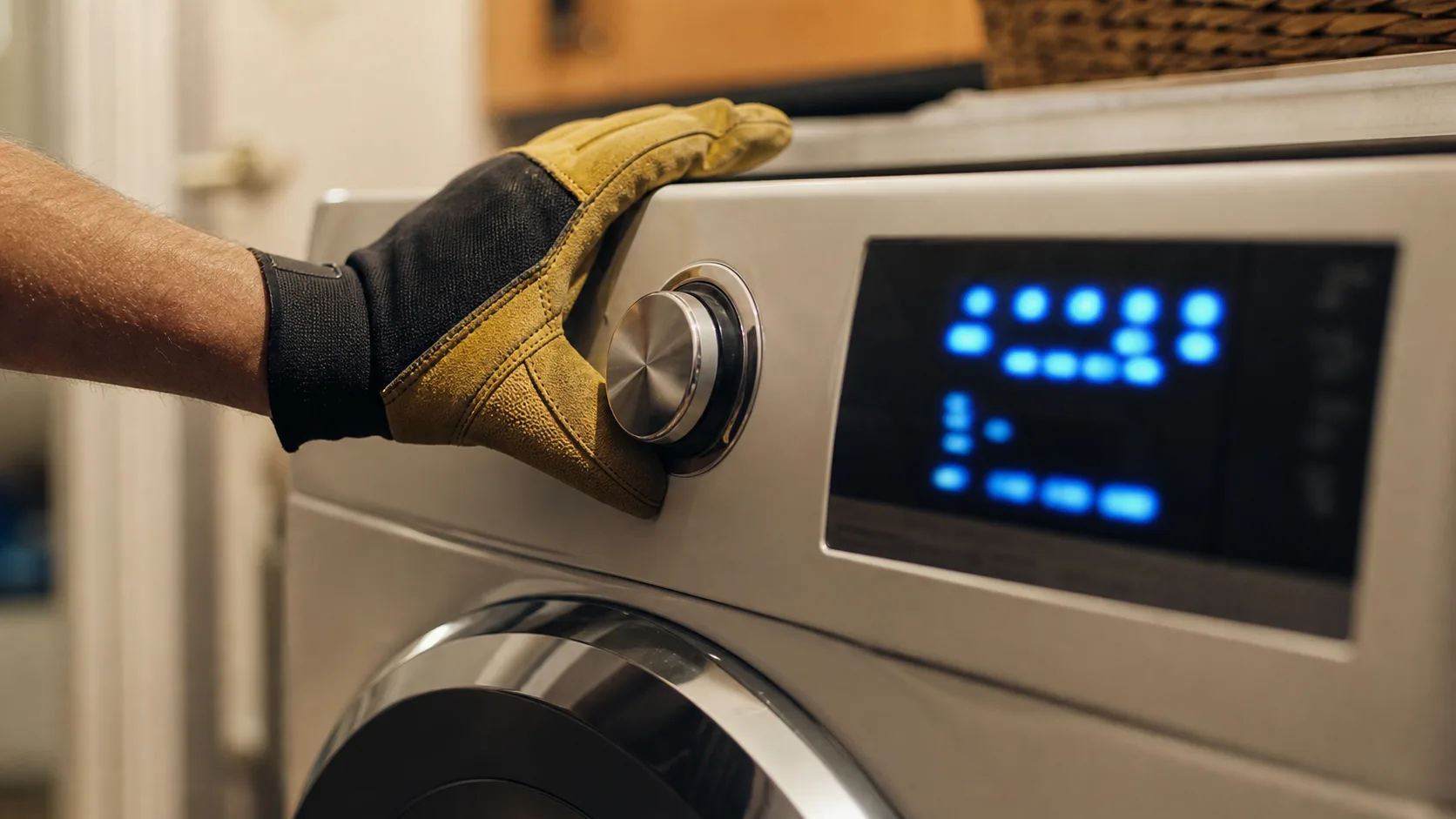
What D80 means
| Code | What it means | Common causes | What to check |
|---|---|---|---|
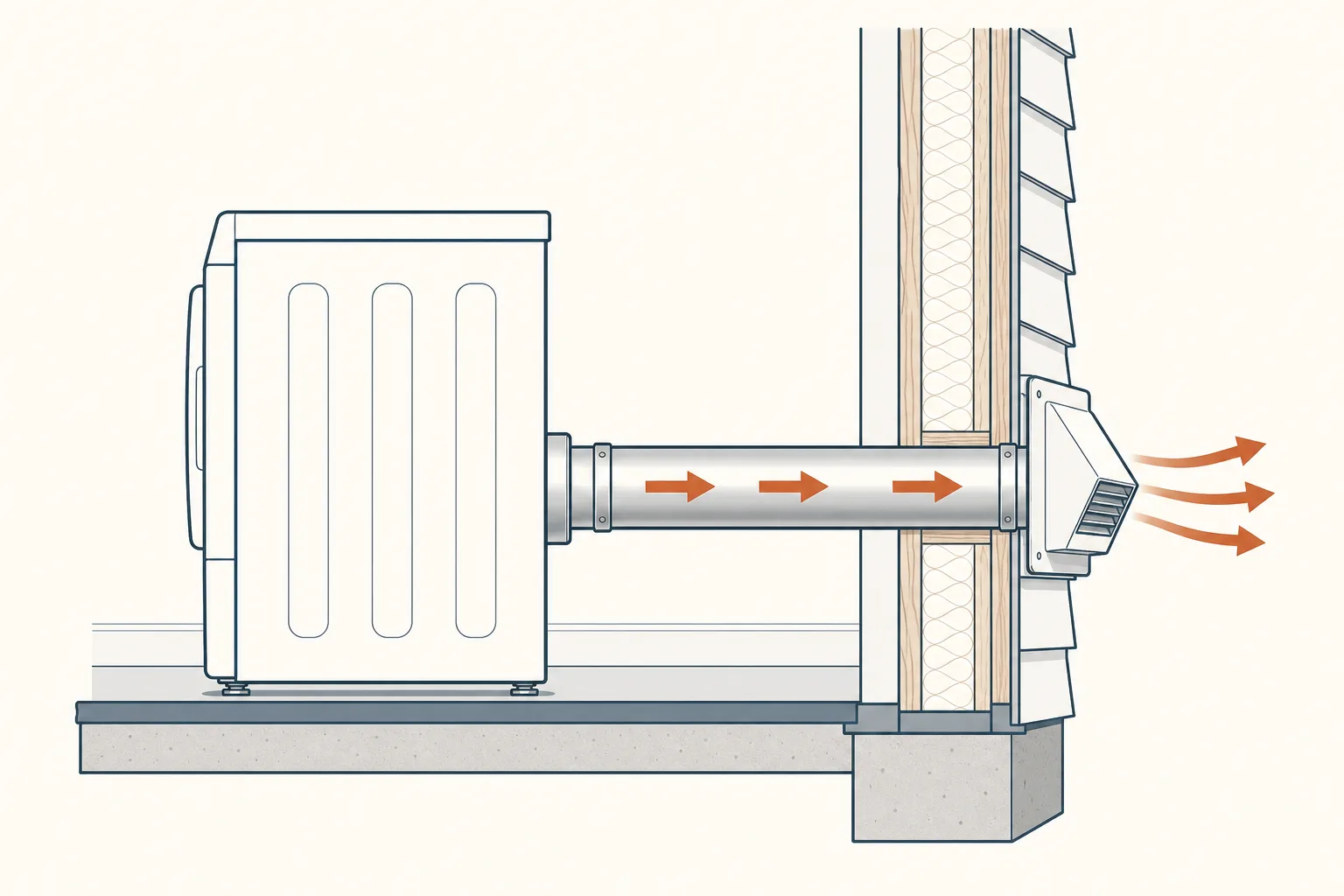
| D80 | Restricted airflow in the exhaust vent, flagged by the dryer's own airflow sensor | Lint buildup inside the vent duct, a crushed or kinked vent hose, an exterior vent cap blocked by debris or a nest, an unusually long or heavily bent duct run | Lint trap, vent hose connection at the back of the dryer, exterior vent cap, the full length of the duct |
LG's own support documentation describes D80 as signaling a meaningful blockage in the exhaust duct, severe enough to restrict airflow but not so severe that the dryer stops running altogether (LG dryer error code documentation). A more advanced code, D90, exists for a more severe blockage on some models and isn't covered on this page. If your display is showing D90, or any code other than D80, that page and the full list of LG dryer codes will confirm what you're dealing with before working through the steps below.
Work through it in order
Start at step 1 even if you're fairly sure you know the cause. It's the fastest check and rules out the most common trigger before you spend time on the harder ones.
Clean the lint trap
Pull the lint trap and clear it completely, including any lint pressed flat against the screen that doesn't come off with a light brush. A clogged trap alone can sometimes trigger D80 before the duct itself is even blocked, so this step is worth doing even if you clean the trap after every load already.
Check the vent hose at the back of the dryer
Pull the dryer away from the wall and disconnect the vent hose where it meets the exhaust port. Look for lint packed inside the hose, and check for kinks or crushing, which is common if the dryer has been pushed back against the wall over the hose itself. A flexible foil or vinyl hose crushes more easily than rigid metal duct.
Check the exterior vent cap
Go outside and look at the vent hood on the exterior wall. Debris, a bird or pest nest, or a flap that doesn't swing open freely under normal airflow are all common blockages at this end. Run the dryer for a minute and check whether air is actually moving out through the cap.
Clear the full duct run
If the hose and the outdoor cap both check out clean, the buildup may be further along the duct itself, especially on a long run or one with several bends. A flexible vent-cleaning brush or rod kit, sold at most hardware stores, reaches lint that's out of reach by hand. This step takes more effort than the first three, but it's still a job most homeowners can do themselves.
Rule out a failed sensor
If D80 keeps showing up after a full, confirmed clear vent path, from the lint trap to the outside cap, the airflow sensor itself may have failed. At that point the fix is a part replacement rather than a cleaning job, and it's a reasonable point to call a technician.
Preventing D80 before it starts
Clearing the code once doesn't mean the job is done. The U.S. Fire Administration recommends clearing lint from the vent pipe at least once a year, more often if drying times start creeping up between cleanings (USFA, Clothes Dryer Fire Safety). Larger households, frequent dryer use, or a long or heavily bent duct run all call for cleaning more often than once a year. Cleaning the lint trap after every load matters too, but it doesn't replace the deeper annual cleaning of the duct itself.