What LE means
| Code | What it means | Common causes | What to check |
|---|---|---|---|
| LE | Leak-detection error: either an actual water leak reaching the sensor on the base pan, or a faulty water-level pressure sensor sending an incorrect reading to the control board | A loose or damaged hose connection, a worn door seal, a cracked or clogged air-pressure hose feeding the level sensor, excess suds from too much or the wrong detergent | Check for visible water near the base and hose connections first, inspect the door seal, run an empty cycle with no detergent to rule out oversudsing, check the pressure-sensor hose if the area stays dry |
Multiple sources tracing back to Samsung's own troubleshooting guidance describe LE the same way: the control board reads water where it shouldn't be, or gets an abnormal signal from the water-level pressure sensor, and treats both as the same leak-detection fault rather than as separate mechanisms (Samsung: washing machine information and error codes; Samsung: washing machine is leaking). This is worth stating plainly, because some general appliance-repair roundups describe LE as a "motor" fault. That framing didn't hold up against the leak-detection mechanism documented consistently across dedicated Samsung troubleshooting resources for both front-load and top-load models, and it isn't the mechanism this page treats as confirmed.
Work through it in order
Check for standing water at the base and hose connections
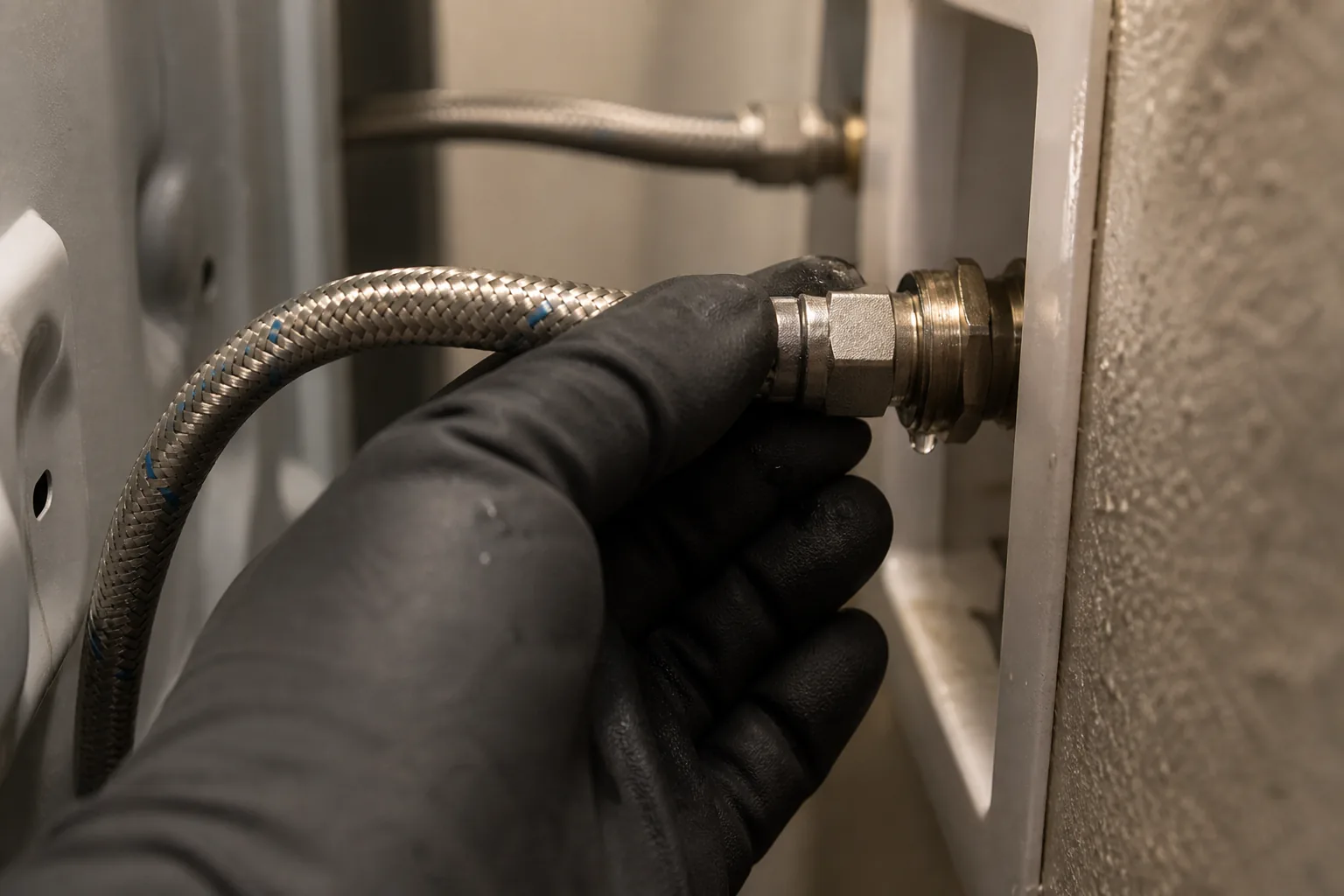
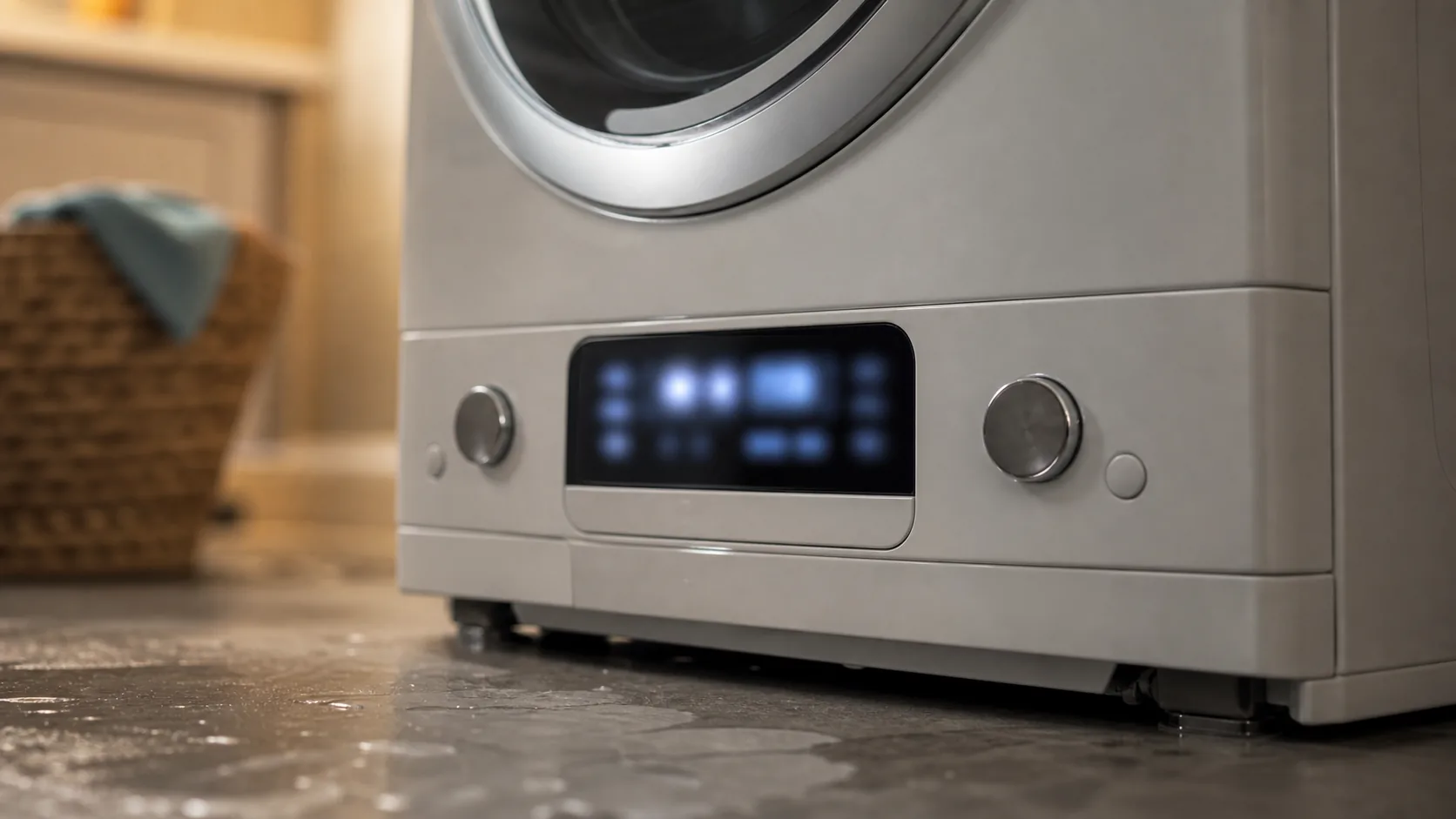
This single check often resolves which branch applies. Look for visible water pooled at the base of the machine, and check every hose connection, supply and drain, at the back of the washer for dampness.
Check the door seal and hose connections (if you find water)
A worn or torn door seal is one of the more common sources of a genuine leak, along with a loose connection where a hose meets the machine or the wall. Tighten or replace whatever's damaged.
Rule out oversudsing (if the area is dry)
Run an empty cycle with no detergent or additives. If suds appear anyway, too much detergent, or a non-HE detergent in an HE machine, is confusing the level sensor into behaving like it's detecting a leak. Repeat empty cycles until the suds clear.
Check the pressure-sensor hose (if still dry and suds-free)
The water-level pressure sensor connects to the tub through a small air hose. A cracked hose, a clogged air dome, or a failed pressure switch can send the control board a false reading that looks identical to a real leak from the outside. This is a point-level check better suited to a technician if it isn't visibly obvious.
Why LE isn't really a leak-or-motor split
The hedge that LE could mean either a leak or a motor problem doesn't match what Samsung's own troubleshooting resources and independent appliance-repair documentation consistently describe. Both dedicated front-load and top-load LE guides point to the same two-branch explanation: an actual leak, or a faulty water-level sensor giving a false reading, not a motor fault standing in as a third option. If you've seen LE described elsewhere as a motor issue, that's worth treating with some skepticism until your model's own manual confirms it, since it isn't the mechanism the more detailed, code-specific sources agree on.