Work through it in order
Start at step 1. Most doors that open on their own get fixed before step 4.
Check for a stuck remote button
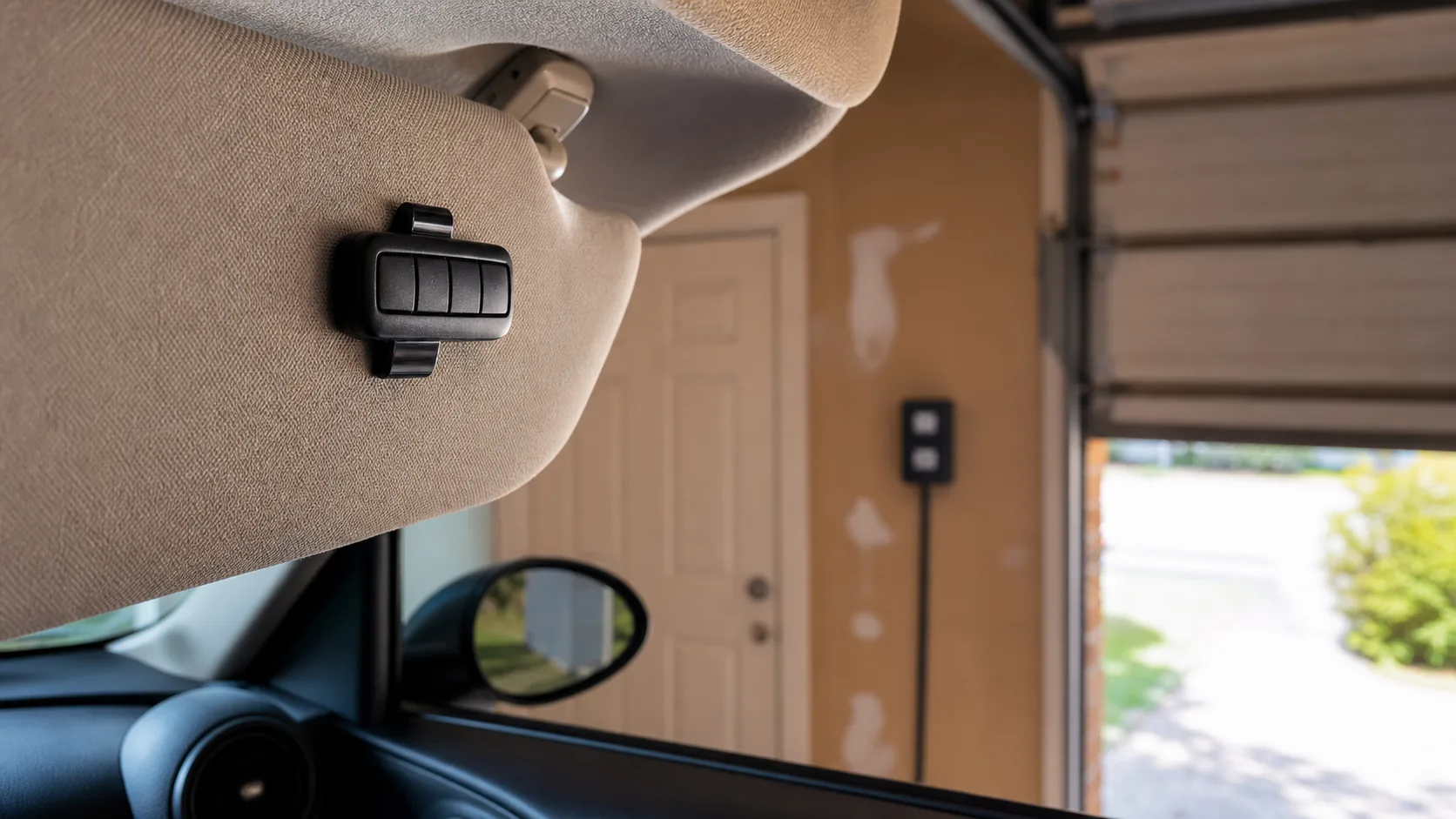
This is the single most common cause. A remote's button gets pressed accidentally while it's stored somewhere it can be bumped, a bag, a car console, a coat pocket, and it sends a continuous or repeated signal that the opener reads as a command. Pull every remote in the house out of storage and check whether any button is physically depressed or stuck partway down. A remote with a worn or sticky button can trigger the door even sitting still on a counter if something is resting on top of it.
Check the wall control button for a stuck switch
Same logic as the remote. A physically stuck wall button, or one with corroded contacts underneath, can trigger the opener without anyone touching it, and it's easy to miss since the button looks normal from the outside. Press and release it firmly a few times to see if it springs back cleanly, and look for any visible wear, cracking, or moisture around the button housing.
Check for interference or a neighbor's remote on the same frequency
This is rare on a modern opener, but it's worth ruling out if the first two steps come up clean. Garage door openers made since the mid-1990s use rolling code technology, which generates a new signal every time a remote is used, so a neighbor's fixed-code remote from decades ago accidentally matching your frequency is close to impossible on current equipment. If your opener is old enough that you're not sure which type it uses, this is one of the few scenarios where it's worth checking the unit's age and manual.
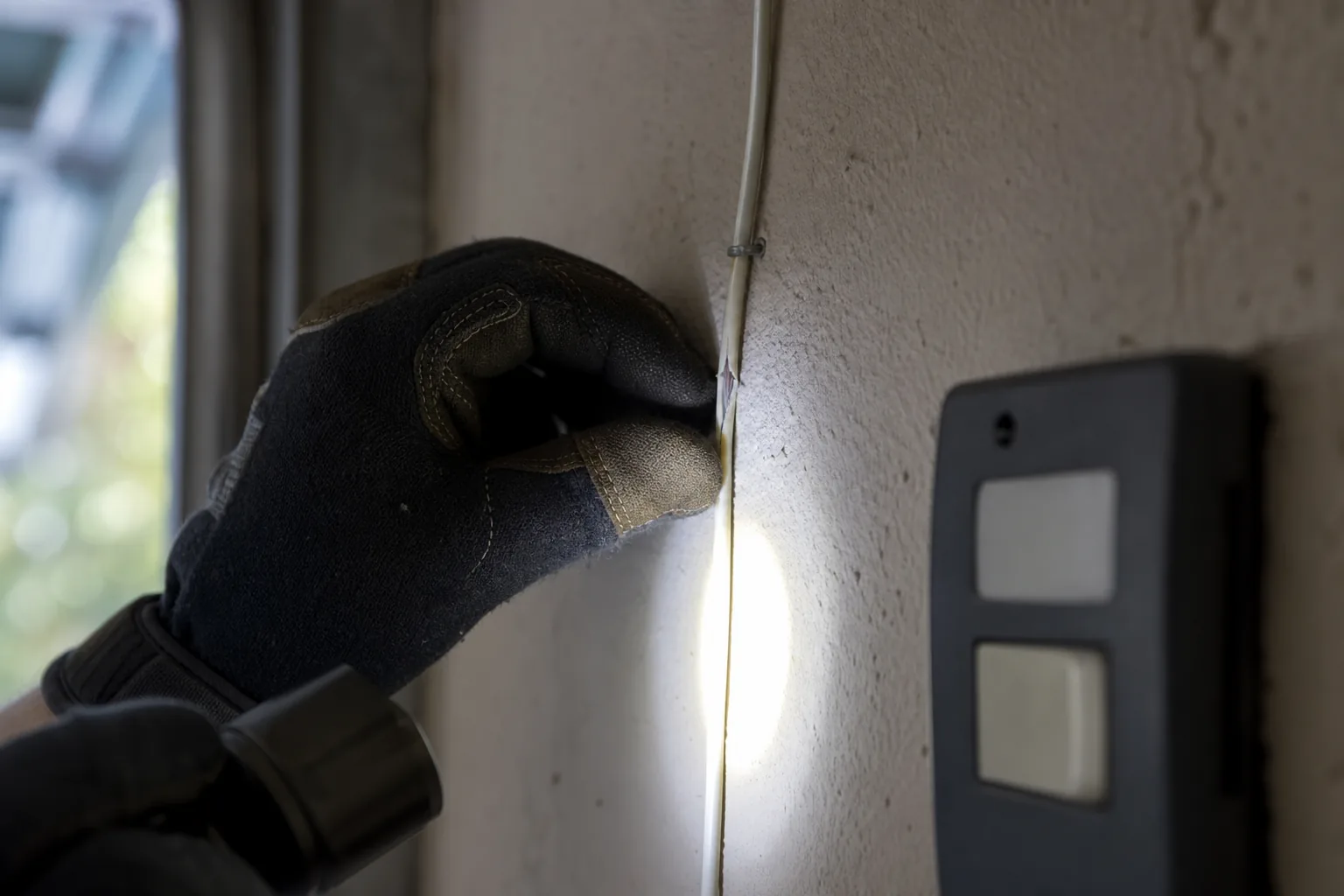
Check the wiring between the wall control and the opener for a short or pinched wire
A damaged wire can send a false signal the same way a stuck button does. This shows up more often in garages where the control wire runs along a wall near stored bikes, tools, or seasonal boxes, since it's easy for the wire to get pinched, nicked, or chewed without anyone noticing. Trace the wire visually from the wall console back to the opener unit and look for any spot where the insulation is damaged or the wire is pressed against something sharp. If you want to isolate this quickly, disconnect the wall button's wires from the opener terminal. If the unexplained openings stop, the wall control or its wiring is the source.
Check the opener's force and travel-limit settings
If the door only ever opens partway on its own rather than fully, this points more toward a misconfigured setting than a stuck button. The opener's force and limit settings determine how much resistance the motor tolerates before it reverses direction, and a setting that's too sensitive can misread normal friction as an obstruction and trigger a partial, unintended movement. Dial and menu placement for this adjustment differs across opener brands, so this is one spot where your own unit's manual is worth pulling out rather than guessing.
Is this a security concern?
Almost never. This symptom is overwhelmingly a remote, wiring, or settings issue rather than a sign the door has been accessed by someone outside the house. Modern openers use rolling code technology, which generates a completely new signal every time a remote is pressed rather than repeating the same code. That makes it extremely unlikely that an outside device is triggering your door directly. If your opener predates the mid-1990s and still uses a fixed, unchanging code, that older technology is more vulnerable in theory, but even then, a stuck remote or a wiring fault in your own garage is still the far more likely explanation than an intruder.