Work through it in order
Check settings and PowerCold
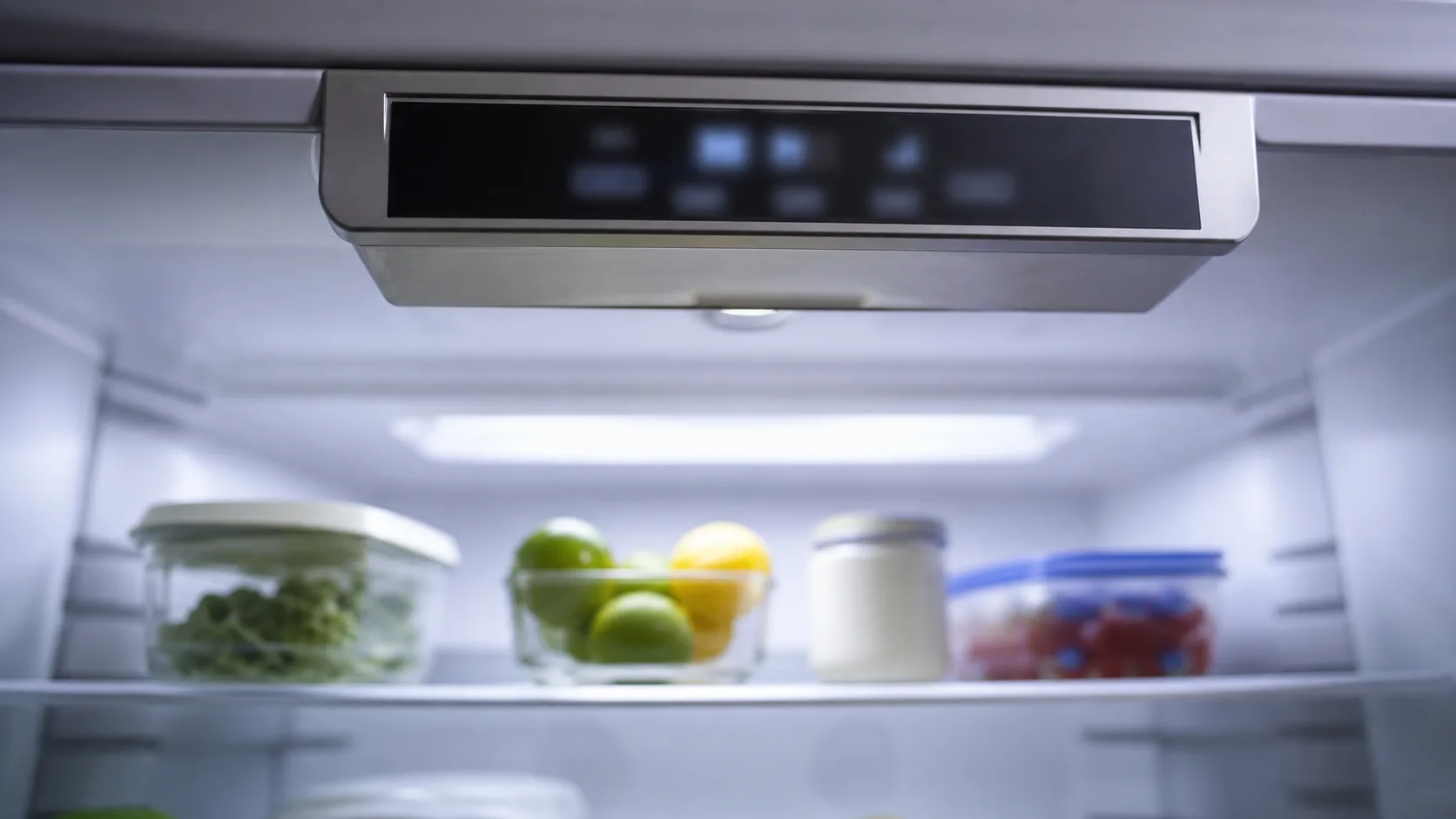
Confirm nothing's been bumped on the control panel first. Then check whether PowerCold is active, a feature on many Maytag models that pulls extra cold air from the freezer to chill the fridge compartment quickly after grocery loading or a door left open. According to Maytag's own product documentation, PowerCold can stay active for up to 24 hours depending on conditions (Maytag, "Why Is My Refrigerator Not Cooling?"). That's long enough to mask a genuine cooling problem for most of a day: the extra cold air borrowed from the freezer can make the fridge compartment read fine while PowerCold is running, only for the underlying issue to show up as soon as it turns off. If it's on, turn it off and give the unit a few hours before judging whether cooling is actually normal.
Check vents for blockage
Check both the fridge and freezer vents for anything blocking them, a milk carton pushed too far back, a bag of frozen vegetables leaning against the opening. Because these vents carry the cold air the whole unit relies on, even one partially covered opening can leave both compartments running warmer than they should.
Clean the condenser coils
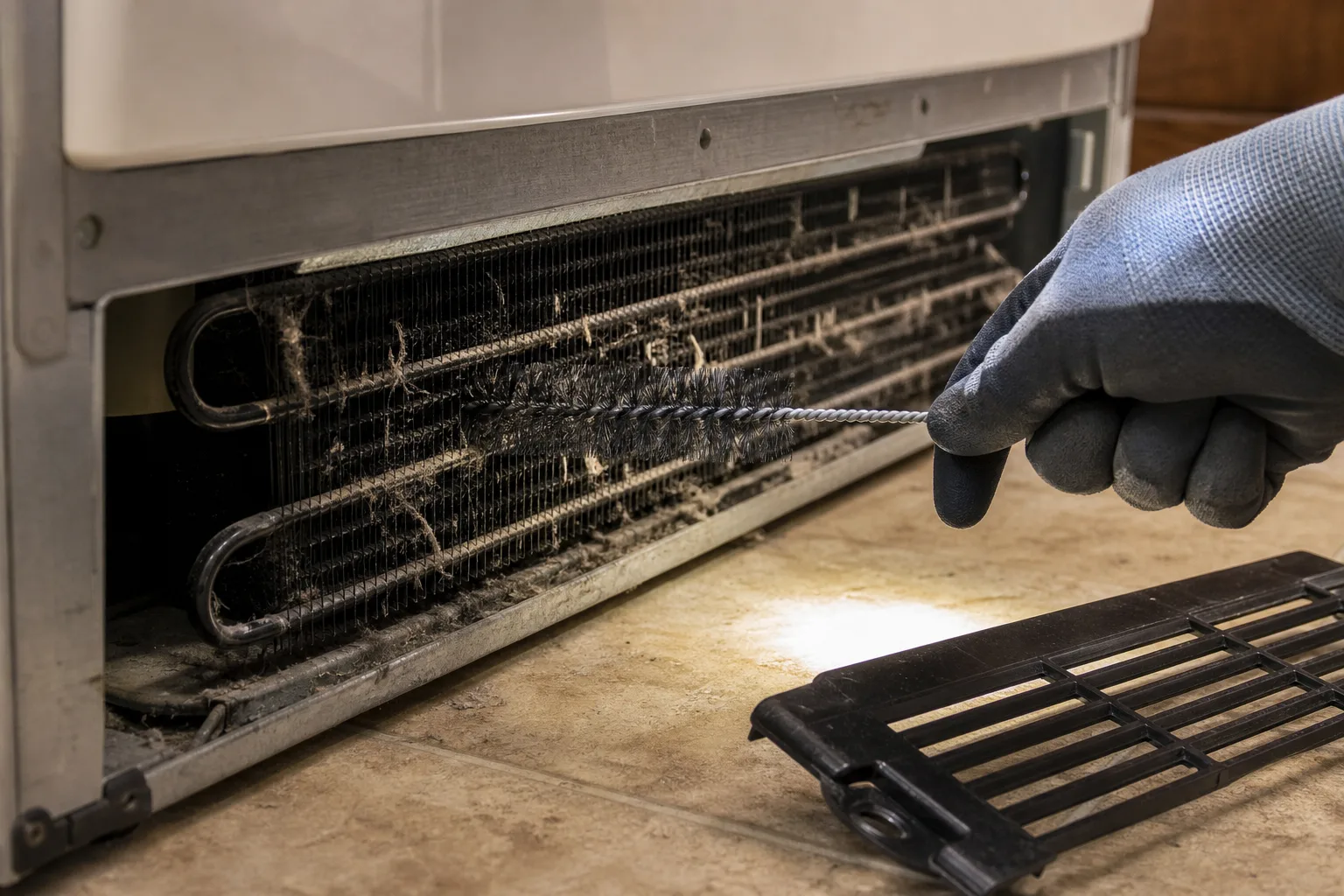
Pull the unit out and look at the condenser coils, usually along the back or bottom panel. A buildup of dust and pet hair acts like insulation, and the coils end up working harder to shed the same amount of heat. A coil brush or a vacuum's crevice tool clears this in a few minutes. Maytag's own use-and-care guide for your specific model is the better source for an exact cleaning interval, though roughly every six months is the figure that comes up most often in general appliance-care advice.
Check the door seals
Run a hand along the door gasket, feeling for cracks, gaps, or spots where it's pulled away from the door frame. The dollar-bill test works well here: close the door on a bill and pull it out. If it slides free with no resistance, the seal isn't holding, and warm, humid air is getting in continuously, which can look identical to a cooling failure.
Check for frost on the evaporator coils
If everything above checks out and cooling still isn't right, look for visible frost buildup where the freezer's back panel or evaporator area is accessible on your model. A frosted-over evaporator usually points to a failed defrost heater or defrost thermostat, the component that's supposed to periodically melt accumulated frost so air can keep circulating past the coils. RepairClinic's Maytag-specific repair guidance describes this as a recognized, checkable failure pattern rather than a rare edge case (RepairClinic, "Maytag Refrigerator Not Defrosting"), but confirming and replacing either part means opening interior panels most owners aren't set up to do safely on their own.
What Maytag's PowerCold feature does, and how it can mask a cooling problem
This is the genuine differentiator worth understanding before assuming the worst. PowerCold is a real, marketed feature, not a myth or a setting buried in a menu somewhere. It works by redirecting extra cold air from the freezer into the fridge compartment for a set period, up to 24 hours per Maytag's own documentation, to bring temperatures down quickly after the door's been open a lot or after loading in warm groceries. The catch: because it's actively forcing in extra cold air, it can keep the fridge compartment reading cold even if the coils, vents, or door seal have a developing problem underneath. Once the 24-hour window ends and PowerCold disengages, the compartment can swing back to running warm, which looks to an owner like the problem "came out of nowhere" when it was actually there the whole time, just covered up temporarily. Checking whether PowerCold has been running, and giving the fridge a few hours after it turns off, is a faster way to separate a real fault from a feature doing exactly what it's designed to do.
Is it the fridge, the freezer, or both?
This distinction narrows things down fast. If only one compartment stays warm while the other cools normally, a blocked vent restricting airflow to just that side is the more likely cause rather than the compressor. Both compartments running warm points more toward the compressor, the condenser coils, or a bigger refrigerant issue, since a healthy compressor with just one blockage usually leaves one side cooling noticeably better than the other.