Work through it in order
Check the temperature settings and demo mode
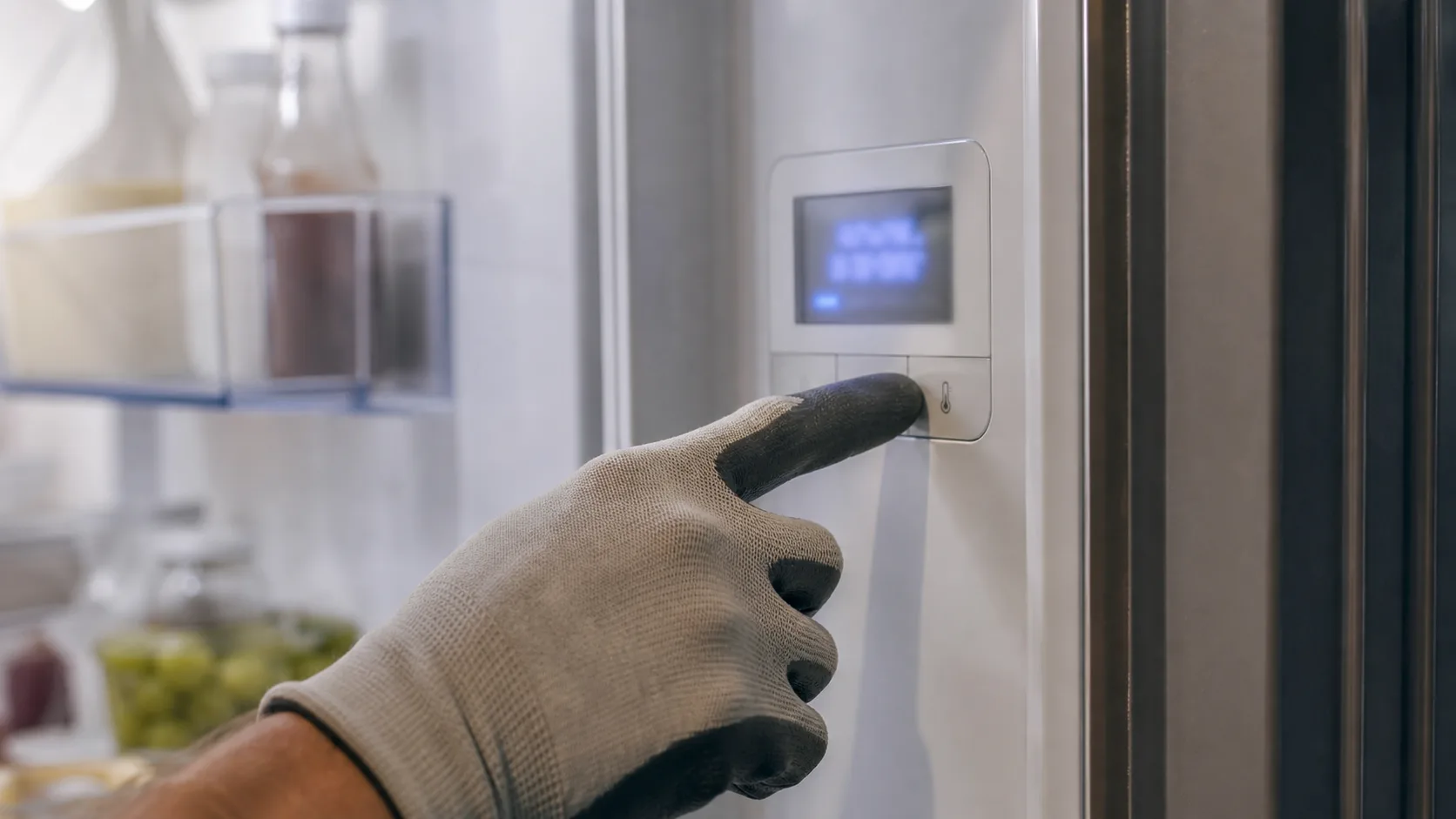
Confirm nothing's been bumped on the control panel first. Then rule out something specific to LG: a demo, or showroom, mode that keeps the lights and display active while shutting off cooling entirely, built for retail floors where a unit shouldn't run its compressor nonstop. On most models, the control panel shows "OF" or "OF F" when it's engaged. LG's own support documentation lists the fix as opening the right-hand door and holding the Fridge and Ice Plus buttons together for several seconds; some newer models use a slightly different combination, so check your owner's manual if that doesn't work (LG, "How to Disable Demo Mode"). It's an easy setting to miss, and it fully explains a complete lack of cooling on its own.
Check for blocked vents between compartments
On most LG models, a single evaporator supplies cold air to both the fridge and the freezer through shared vents. Food packed directly against a vent opening in either compartment can restrict that shared airflow enough to weaken cooling in both sections at once, even with nothing actually broken. Clear anything pressed against a vent and give the unit a few hours to catch up before moving on.
Clean the condenser coils
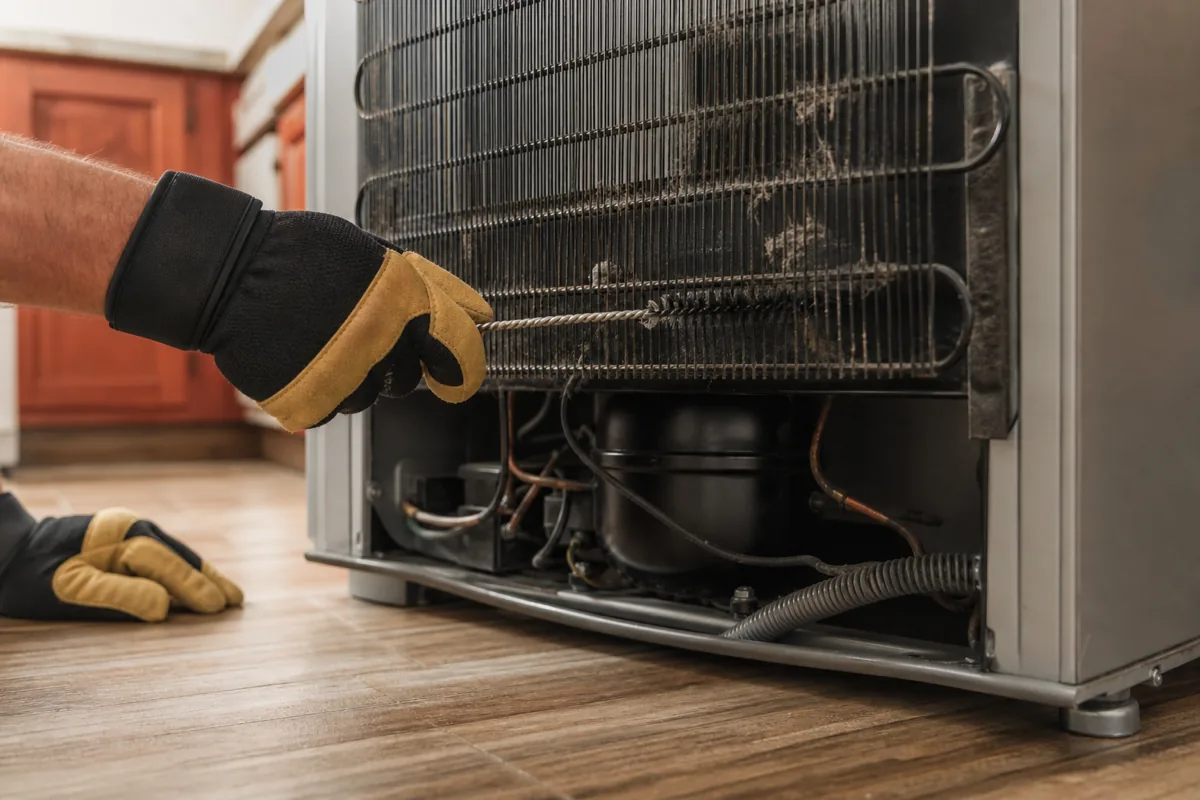
Pull the unit away from the wall, unplugged, and look at the condenser coils, usually along the back or underneath behind the front kick plate. Dust and pet hair build up here over time and insulate the coils enough to reduce how well they release heat, which shows up as noticeably weaker cooling. A coil brush or a vacuum with a narrow attachment clears this in a few minutes. Manufacturer guidance commonly points to cleaning coils roughly every six months for typical households, more often with pets that shed, though it's worth checking your specific model's care documentation for the exact interval before treating that as a fixed number.
Check the door seals
Run a hand along the door gasket, feeling for cracks, gaps, or spots where it's pulled away from the door frame. The dollar-bill test works well here: close the door on a bill and pull it out. If it slides free with no resistance, the seal isn't holding. A gasket that doesn't seal fully lets warm, humid air in continuously, and that can look identical to a cooling failure, especially during warmer months.
If everything above checks out
No cooling after confirming settings, vents, coils, and door seals almost always points to the evaporator fan, the compressor, or a refrigerant fault. None of these are reasonable DIY repairs, and refrigerant work specifically requires EPA certification. This is where a technician takes over.
Is it the fridge, the freezer, or both?
This distinction narrows things down fast. If only the freezer stays cold while the fridge doesn't, or the other way around, the shared-vent airflow in step 2 is the more likely cause rather than the compressor. A healthy compressor paired with a blocked vent will usually cool one compartment better than the other, since one side keeps getting starved of air the other side still receives. Both compartments running warm points more toward the compressor, the coils, or a bigger fan or refrigerant issue.