Work through it in order
Check settings and sabbath mode
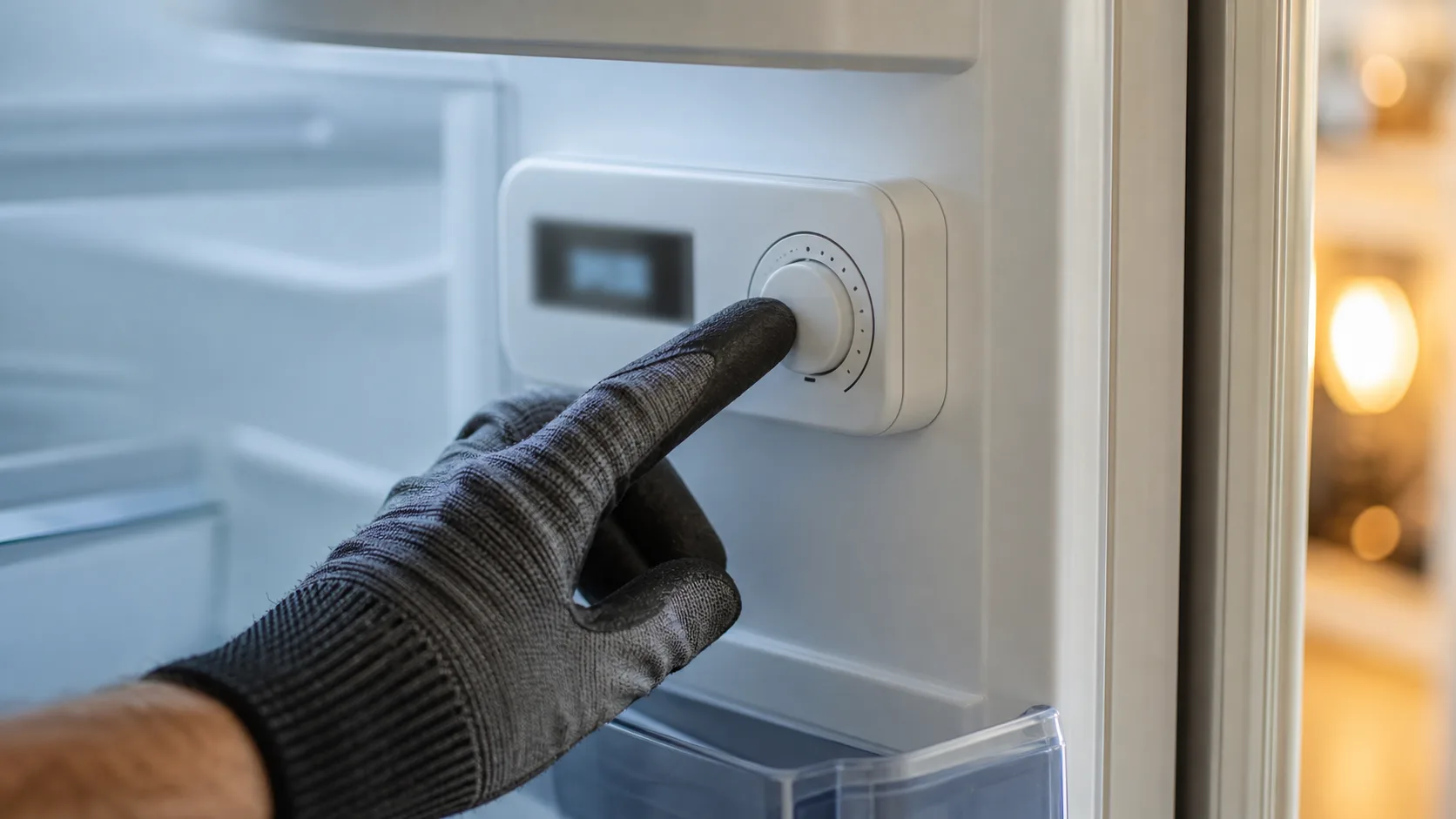
Confirm the temperature settings haven't been bumped. Then check whether sabbath mode is active, a feature that changes how the lights, displays, and some cycling behavior work to accommodate religious observance requirements, according to Whirlpool's own product documentation (Whirlpool, "What Is Sabbath Mode?"). It doesn't stop cooling on its own, but it's an easy thing to activate by accident, and it's worth ruling out early alongside the more obvious setting checks.
Check vents for blockage
Check both the fridge and freezer vents for anything blocking them, a milk carton pushed too far back, a bag of frozen vegetables leaning against the opening. Because these vents carry the cold air the whole unit relies on, even one partially covered opening can leave both compartments running warmer than they should.
Clean the condenser coils
Pull the unit out and look at the condenser coils, usually along the back or bottom panel. A buildup of dust and lint acts like insulation, and the coils end up working harder to shed the same amount of heat. A coil brush or a vacuum's crevice tool handles this in a few minutes. Six months between cleanings is the figure that shows up most often in general appliance-care advice, but Whirlpool's own documentation for your model is worth checking before locking in that number.
Listen for the compressor clicking or humming without starting
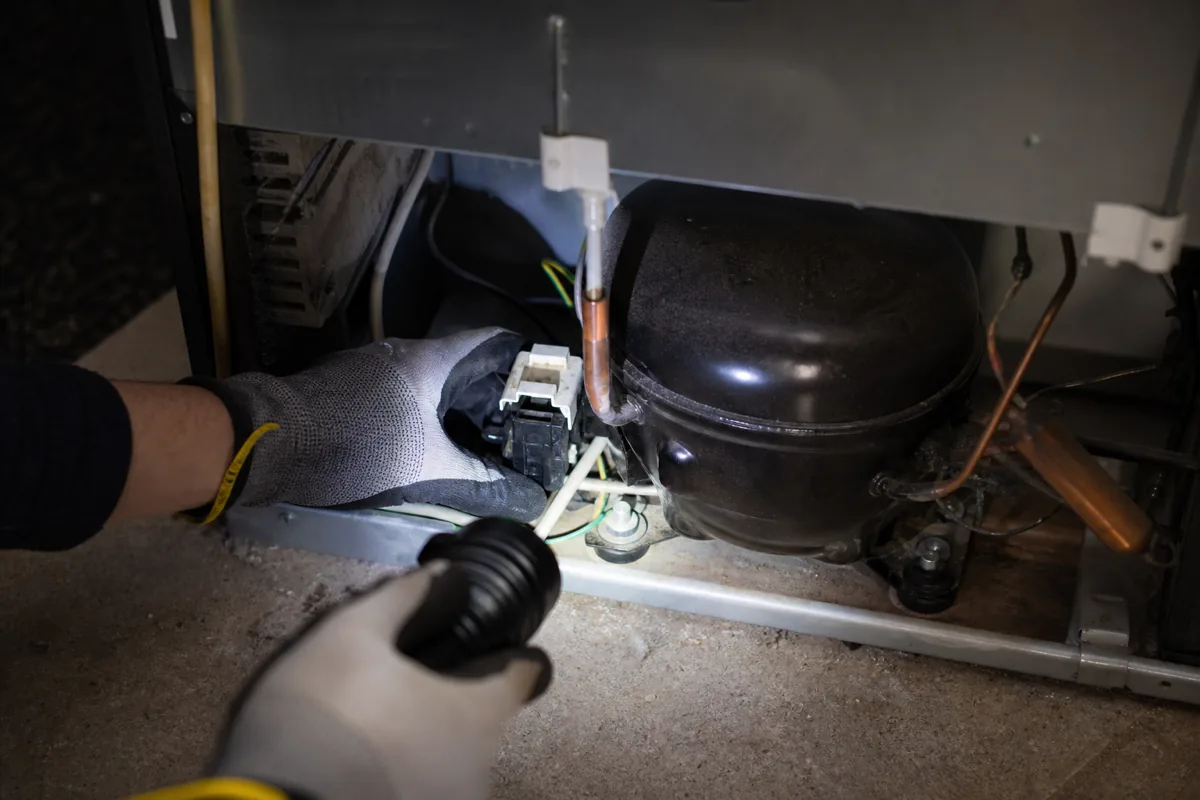
This is the Whirlpool-specific check worth doing before assuming the worst. If the compressor makes a clicking or humming sound but never fully starts, that's a commonly reported symptom of a failed start relay or start capacitor, small components mounted near the compressor that give it the extra electrical push it needs to start running. An iFixit repair guide written specifically for this Whirlpool component notes that a relay clicking repeatedly every few minutes without the compressor catching is a recognized sign that the relay itself, rather than the compressor, has failed (iFixit, "Whirlpool Refrigerator Start Relay Assembly Replacement"). It's a well-defined, relatively affordable part-replacement job, though confirming it usually calls for basic multimeter testing.
If the compressor doesn't run or make any sound at all
With coils, vents, and settings already checked out clean, and no clicking or humming from the compressor whatsoever, this points to a broader electrical or compressor failure. That's a job for a technician.
Why a clicking or humming sound is actually good news
It's worth reframing this symptom rather than just noting it. A compressor that clicks or hums but won't start usually rules out the more expensive problem, a failed compressor, in favor of a smaller and cheaper one, the relay or capacitor. Most generic troubleshooting lists don't make this distinction clearly, but it matters for how worried you should be and what the repair is likely to cost.