Work through it in order
Check temperature settings on both the fridge and freezer control
Frigidaire units commonly set the freezer's temperature first, since that cold air then feeds the fridge through the damper described below. A fridge-only cooling problem often starts with the freezer setting rather than the fridge one, so check both controls, not just the compartment that's actually warm.
Check for blocked vents, including the air damper itself
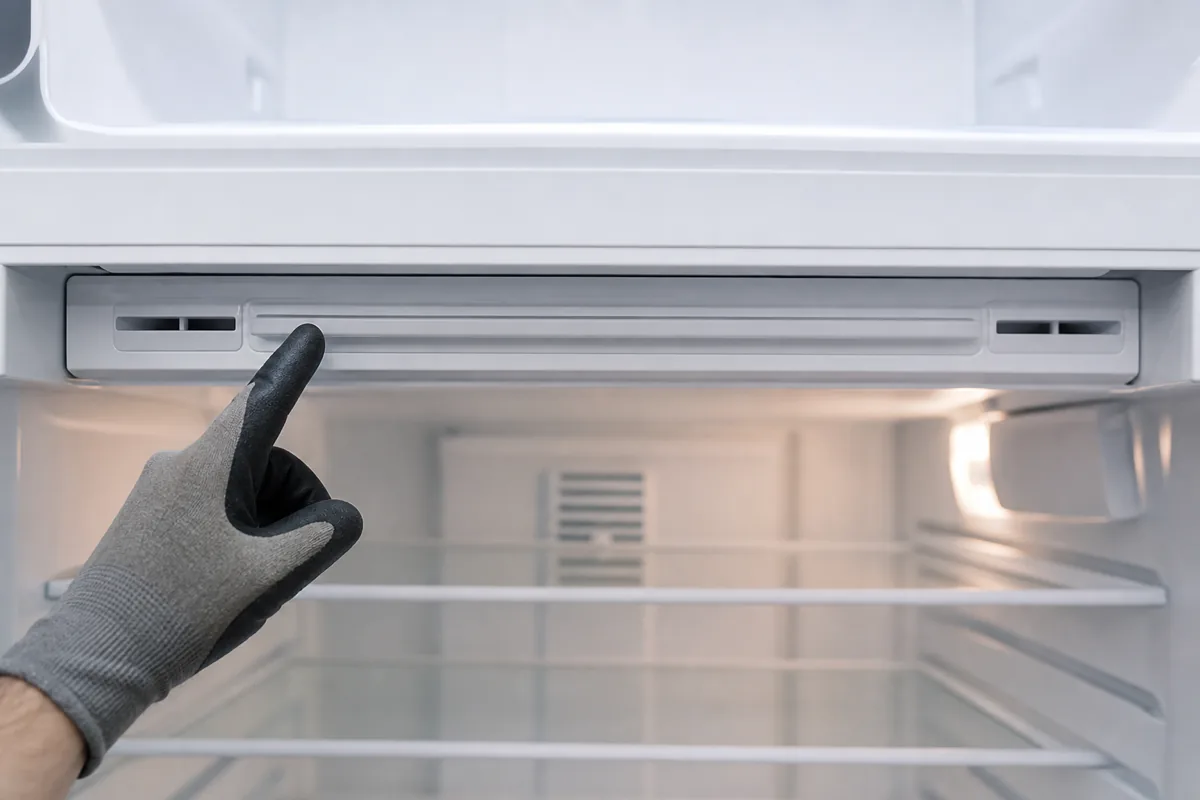
Check every vent opening in both compartments for anything blocking it, a stray container or bag of food nudged too far back is the most common culprit. Pay particular attention to the vent near the top of the fresh-food compartment. That's where cold air enters from the freezer through the damper assembly, and it's a more specific, and more important, checkpoint than a generic vent, since it's the one place all of the fridge's cold air has to pass through.
Clean the condenser coils
Where the condenser coils sit varies by model on Frigidaire units, built-in models often route them differently than standard freestanding ones, but wherever they are, dust and lint buildup insulates them the same way and cuts cooling efficiency. A coil brush or vacuum attachment clears it in a few minutes. The often-cited six-month cleaning interval is a reasonable default, though it's worth confirming both the interval and the coil's location against Frigidaire's care documentation for your specific model.
Check the air damper (diffuser)
This is the check specific to how Frigidaire's single-evaporator system splits cold air between compartments. The air damper, sometimes called a diffuser, is a motorized flap near the top of the fresh-food compartment that opens and closes to control how much cold air moves in from the freezer. A damper that fails in the closed position cuts off cold air to the fridge section entirely, even though the freezer stays cold, while one that fails open can send too much cold air into the fridge and cause the freezer to work overtime and ice up (RepairClinic, "Frigidaire Refrigerator Freezer Is Cold But Refrigerator Is Warm"). On some units, you can hear a faint clicking or motor sound as the damper opens and closes normally, which is worth listening for as a baseline before assuming it's failed. Confirming and replacing a damper is a moderate-difficulty DIY job, more involved than the checks above but within reach for a confident owner.
If everything above checks out
Once settings, vents, coils, and the damper are all ruled out and cooling still hasn't returned, the compressor or the refrigerant charge is the remaining suspect. Both call for a certified technician rather than further DIY troubleshooting.
Fridge warm, freezer fine: check the damper before the compressor
This is worth stating plainly, since it changes how worried you should be. Because Frigidaire's airflow design routes all of the fridge section's cold air through this single damper, a warm fridge with a working freezer more often points to a damper problem than to a compressor failure. A damper is a smaller, cheaper part to replace than a compressor, and it's the more likely cause given this specific symptom pattern.