Work through it in order
Check settings and demo mode
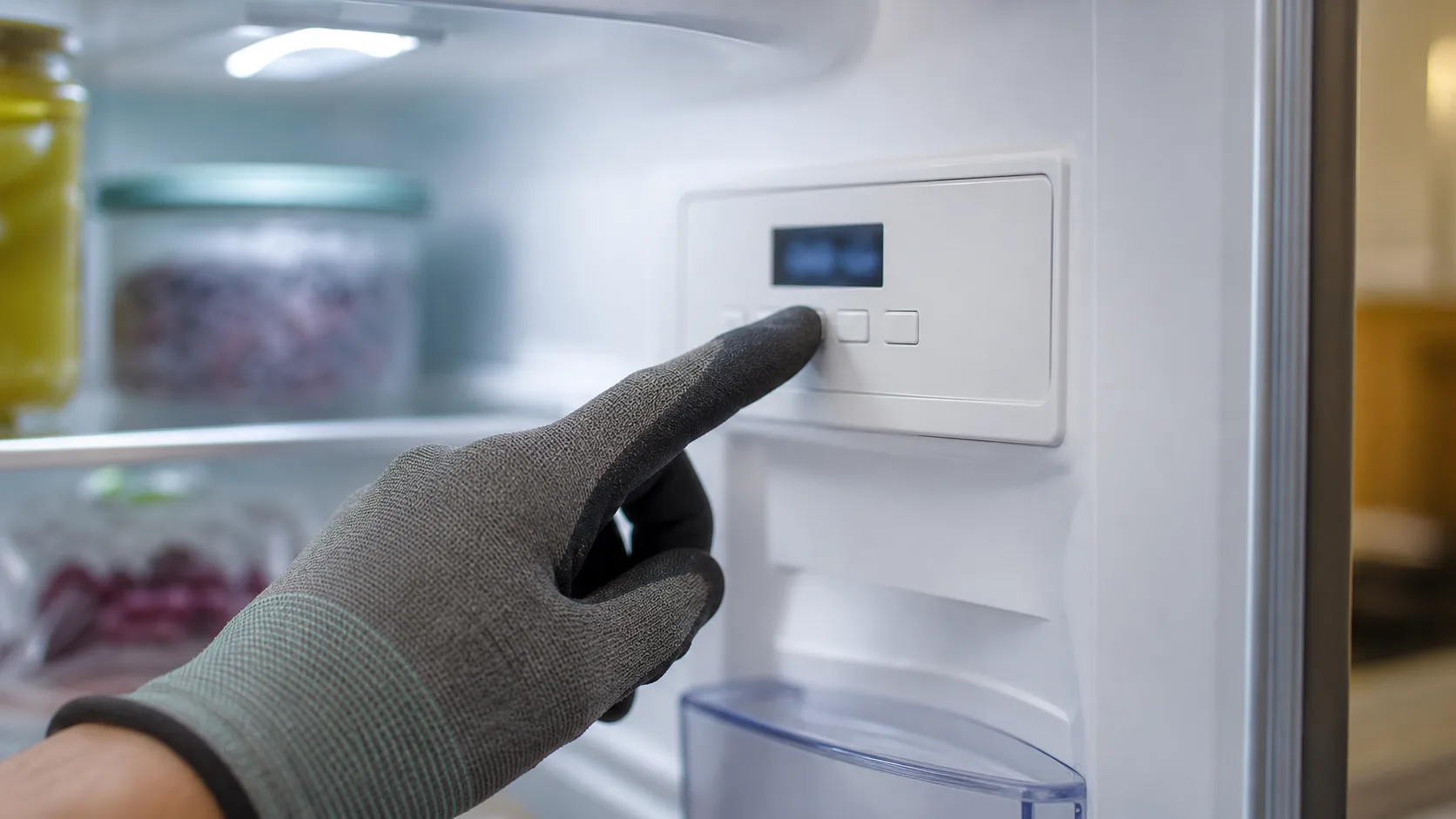
Confirm the temperature settings haven't been bumped first. Then check for GE's demo, or showroom, mode, a setting built for retail floors that keeps the display and lights active while cooling is disabled entirely. GE's own support documentation lists a display reading "dE no" or "Showroom Mode" as the sign a unit is in this state, and notes the button combination to clear it varies by model generation (GE Appliances, refrigerator demo mode support content), so check your owner's manual or GE's support site for the exact combination on your unit rather than assuming one universal method. It's an easy setting to trigger by accident during delivery or a house move, and it fully explains a total lack of cooling on its own.
Check for blocked vents between compartments
Most conventional GE refrigerators use a single evaporator in the freezer that supplies cold air to the fridge section through a shared vent, the same basic design LG, Samsung, and Whirlpool use on their standard lines. Some higher-end GE models instead use GE's own two-evaporator ClimateKeeper system, which cools each compartment independently (GE Appliances, ClimateKeeper Dual Evaporator and ClimateKeeper2 Systems). Check which system your model uses before assuming a single blocked vent explains warm temperatures in both compartments. Either way, food packed against a vent opening in either section can restrict airflow enough to weaken cooling.
Clean the condenser coils
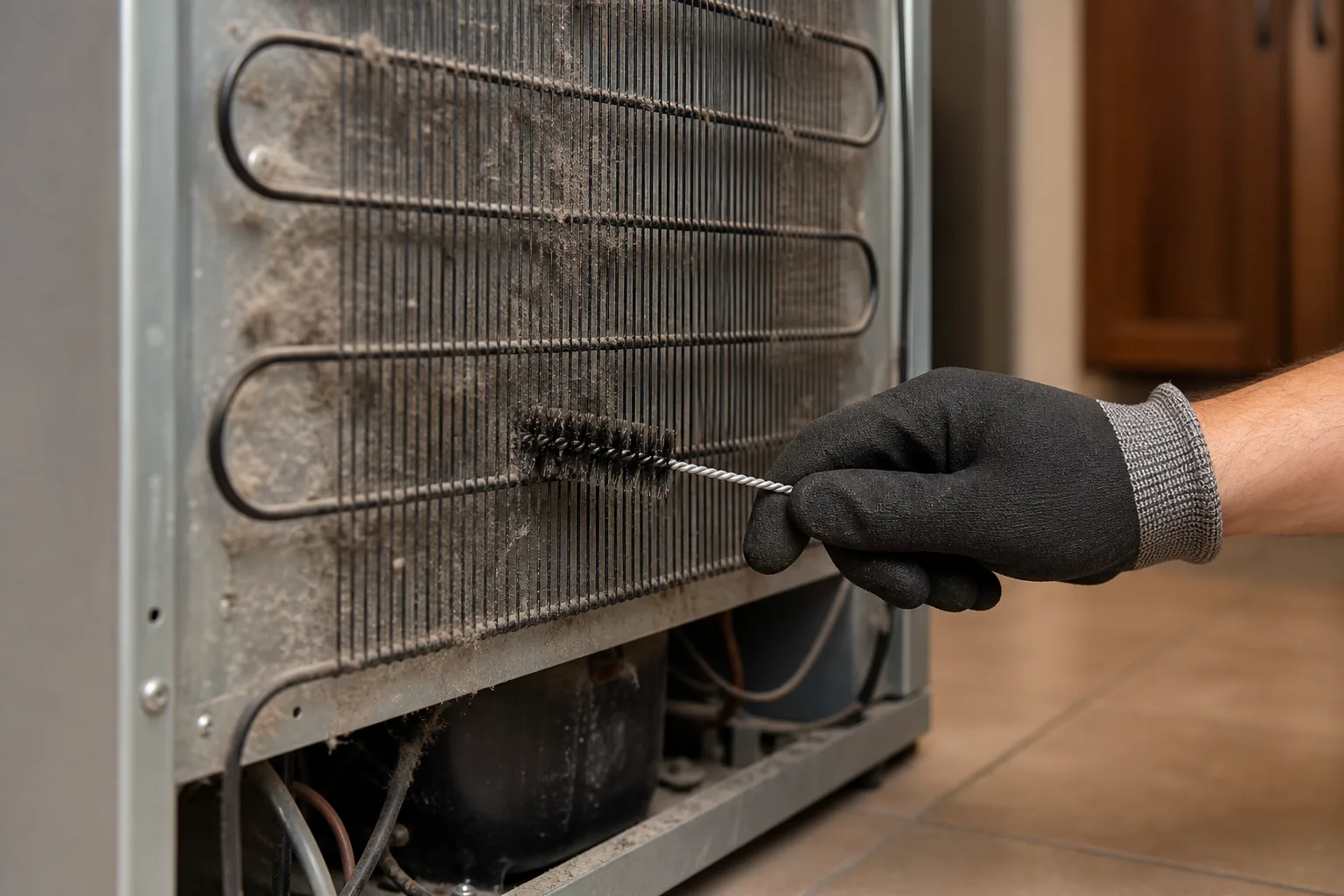
On most GE models, the condenser coils run along the back panel or sit underneath behind the front kick plate. A buildup of dust and pet hair acts as insulation, so the compressor has to run longer to shed the same amount of heat, which shows up as sluggish overall cooling rather than a sudden failure. Vacuuming with a narrow attachment, or going over the coils with a coil brush, takes only a few minutes. Twice a year is a reasonable starting interval for most households, more often if pets shed indoors, though GE's use-and-care guide for your specific model is worth checking before treating that as a fixed schedule.
Check the door seals
Feel around the full length of the door gasket for cracks, gaps, or a stretch that's pulled loose from the frame. A quick way to test it: shut the door on a dollar bill and pull the bill out slowly. Solid resistance means the seal is doing its job; if the bill slides free easily, the gasket isn't sealing and humid room air is leaking in every time the compressor cycles.
Check for frost or ice buildup on the evaporator coil
This is the GE-specific check worth doing before assuming the worst. Behind the freezer's rear interior panel sits the evaporator coil, and on GE units, a failing defrost heater, thermostat, or timer can let frost accumulate there past what the normal automatic defrost cycle clears. RepairClinic's GE-specific repair guidance describes this pattern directly: if the defrost heater doesn't turn on when the defrost thermostat senses the coils are cold enough, or if the heater assembly has burned out, frost keeps building until eventually no air can move through the coil at all (RepairClinic, "GE Refrigerator Not Defrosting"). This can present as the freezer staying cold-ish while the fridge section slowly warms, or eventually both sides failing as the ice blockage worsens.
Why frost buildup behind the panel is worth checking before assuming the compressor failed
The mechanism matters here, not just the symptom. A healthy compressor still can't move cold air through a coil that's sealed under a layer of ice. Checking for this doesn't always require full disassembly: a distinctly cold section of the freezer's back panel, a change in fan noise, or visible frost if you do remove the panel are all signs worth looking for. If you unplug the unit for 24 hours or more to let accumulated ice melt on its own and the same problem returns within a day or two of running again, that points to the defrost heater, thermostat, or timer rather than a one-time bad batch of ice.
Is it the fridge, the freezer, or both?
If only one compartment is affected, a blocked shared vent or evaporator frost restricting airflow to that specific section is the more likely cause. If both the fridge and freezer are running warm, that points more toward the compressor, the condenser coils, or a bigger refrigerant issue, since a healthy compressor with just one blockage usually leaves one compartment cooling noticeably better than the other.