The two signs of a jam
A hum with no spinning. The motor is powered and trying to run, but the flywheel is fully stuck, usually by something wedged solidly enough that the motor can't overcome it. This is the more common of the two.
A grinding, rattling, or clanking noise. Something is loose or partially caught, spinning but catching on each rotation rather than fully blocking the flywheel. This often means a small object, a bottle cap, a piece of silverware, is bouncing around inside rather than truly wedged in place. Both signs point to a jam, but the fix approach differs slightly, which is covered in step 5 below.
Work through it in order
Cut power at the wall switch and the breaker
Do both, not just the wall switch. Cutting power only at the switch still leaves the circuit live, and a disposal that restarts while your hand or a tool is inside the chamber is exactly the scenario this rule exists to prevent.
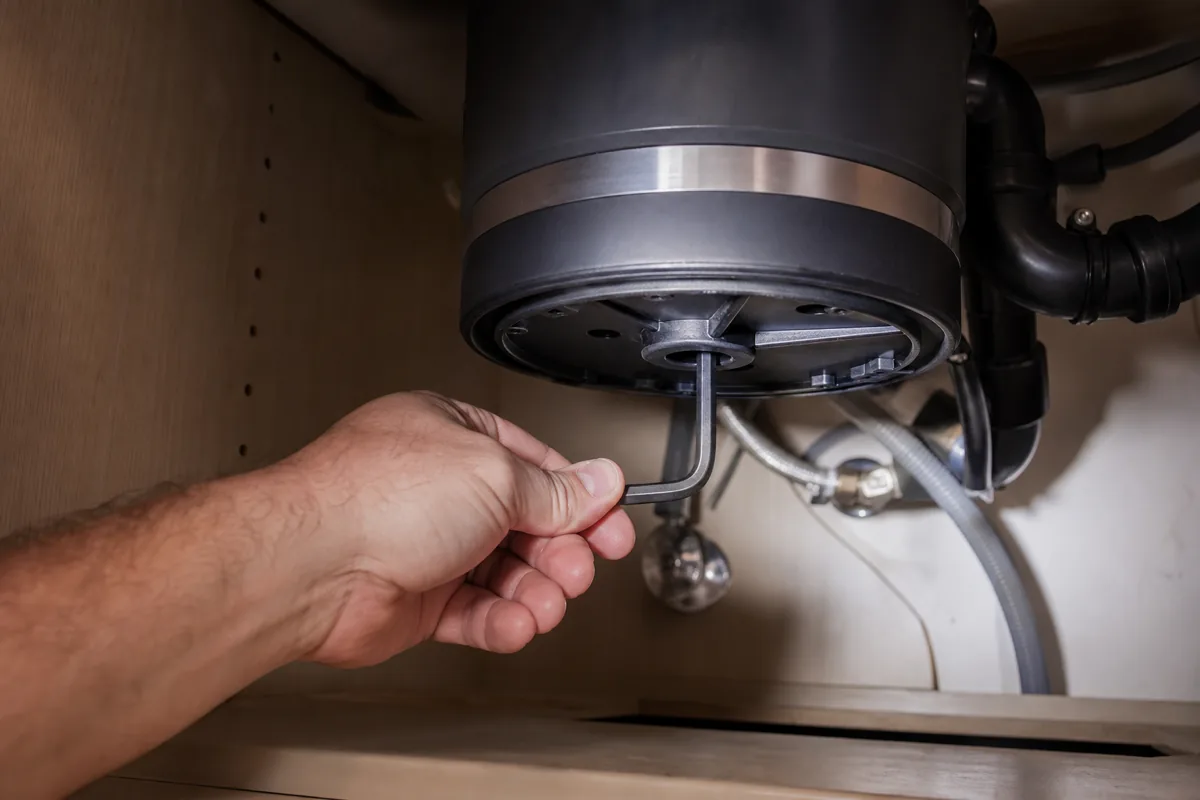
Insert a hex key into the bottom port
Most residential disposals have a small hexagonal socket at the bottom center of the unit, built specifically for manually turning the flywheel. Insert a hex key (typically 1/4 inch) until it seats fully, then work it left and right, rocking the flywheel back and forth rather than trying to force it in one direction. It usually takes several rotations before the obstruction breaks free.
Use a wooden spoon handle or a disposal wrench from the top if there's no bottom port
Some models don't have a hex socket. In that case, with the power confirmed off, use a long, sturdy handle, a wooden spoon or a purpose-made disposal wrench, wedged against one of the flywheel's blades from the top opening, and rock it in both directions the same way.
Once it turns freely by hand, restore power and press the reset button
A small red reset button on the underside of most units trips automatically when the motor overheats or overloads, and pressing it back in after a jam clears is usually the last step before the disposal runs normally again. If it won't stay in, the flywheel likely still isn't fully free, so go back and recheck it before trying again.
If the noise was more of a rattle than a jam, check for a loose object
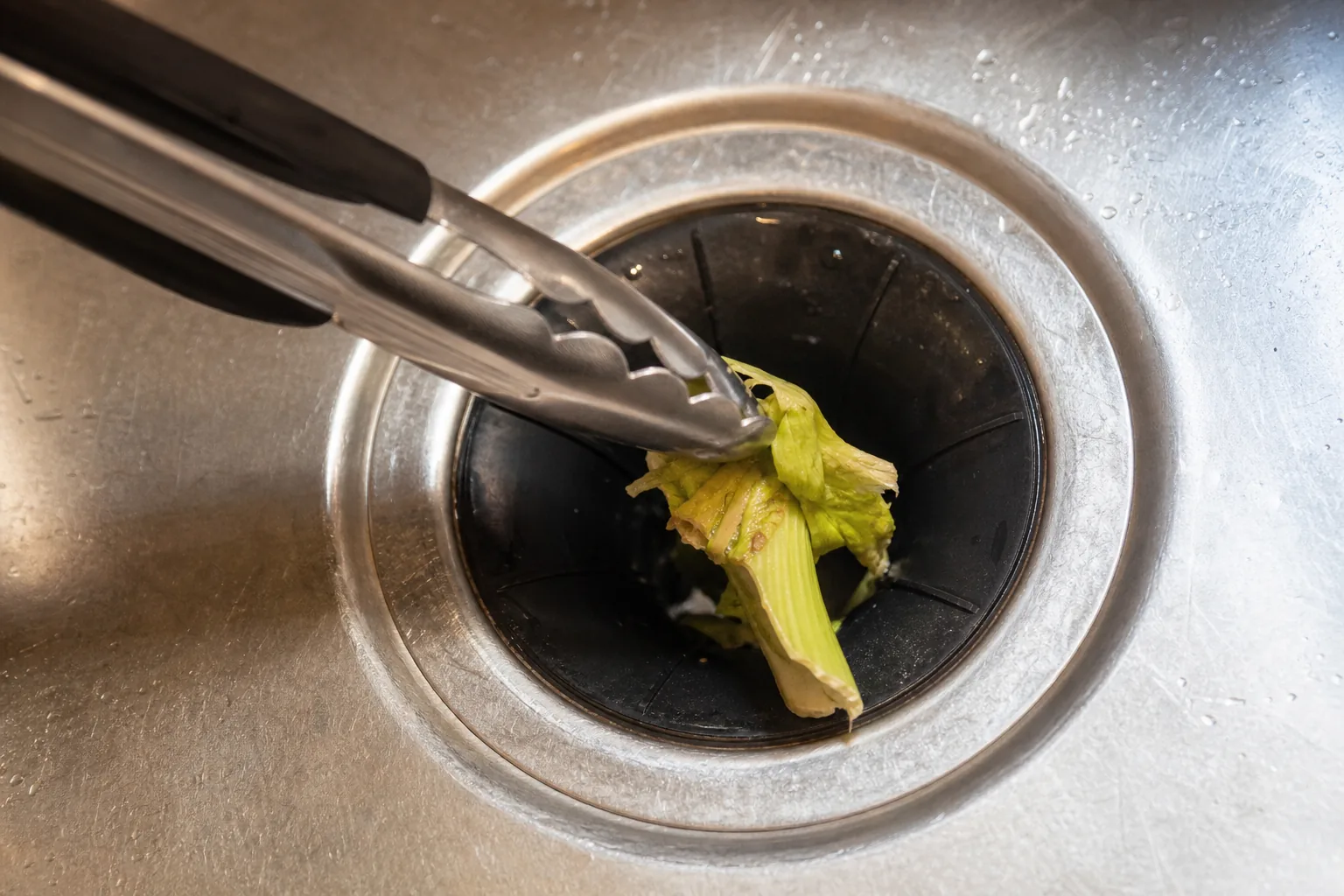
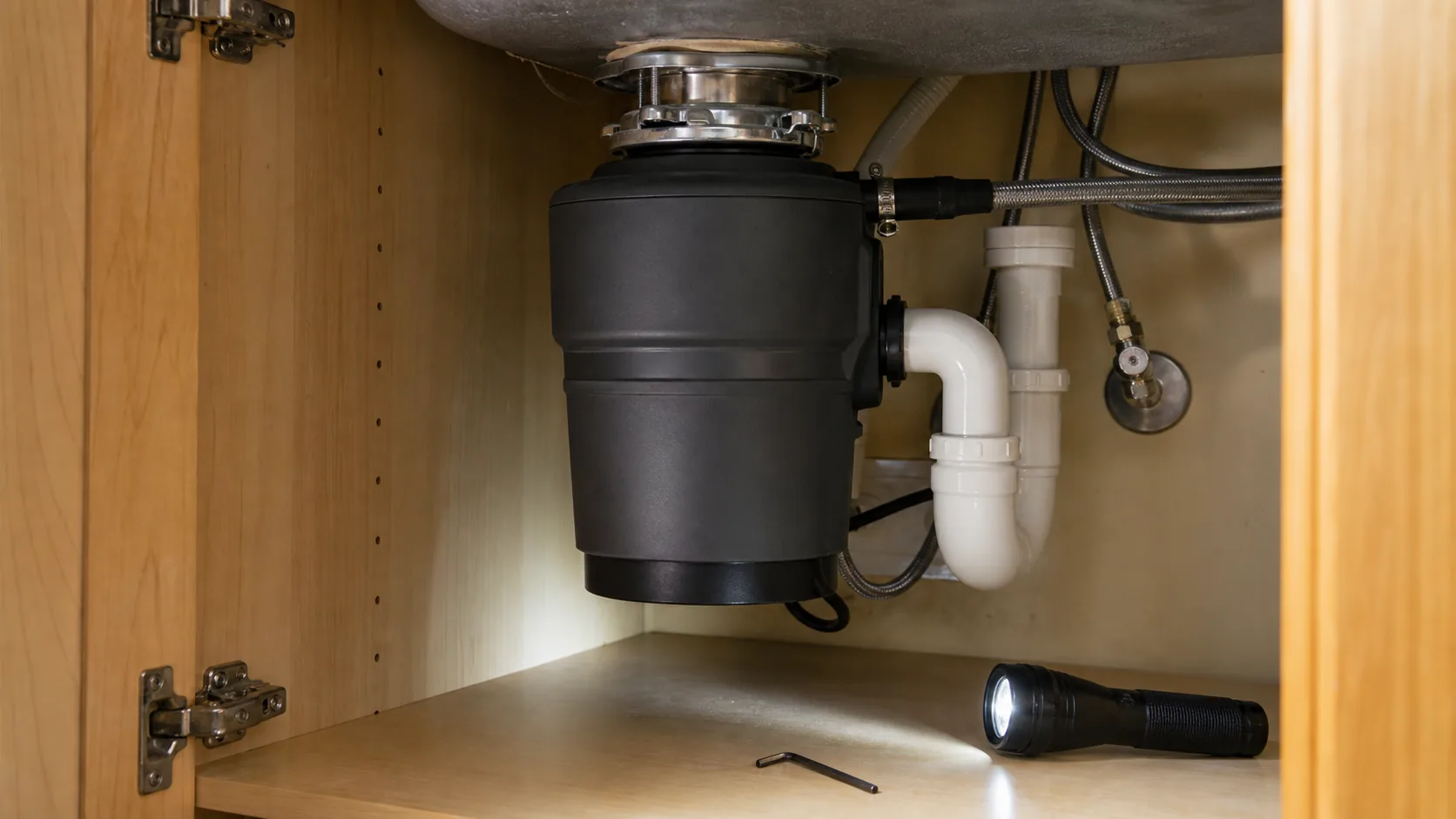
With power still off, use a flashlight and a long-handled tool, tongs work well, to check for anything loose and spinning rather than wedged in place: a bottle cap, a piece of silverware, a small bone fragment. Remove it with the tool, never your hand, and don't assume the flywheel itself needs freeing if the object was just bouncing around loose.
What usually causes a jam
Fruit pits are one of the most common culprits, along with fibrous vegetable scraps like celery stalks, corn husks, and onion skins that wrap around the flywheel instead of grinding cleanly. Utensils that fall in accidentally, a fork or spoon slipping off a plate during rinsing, are another frequent cause, along with small bones from poultry or fish that are harder and denser than the disposal is built to handle. None of these mean the unit is failing. They're the normal wear-and-tear cause of most jams, and avoiding them going forward is usually enough to prevent a repeat.