Work through it in order
Start with the reset button. It resolves the majority of dead-disposal cases in under a minute, long before anything more involved is worth trying.
Press the reset button
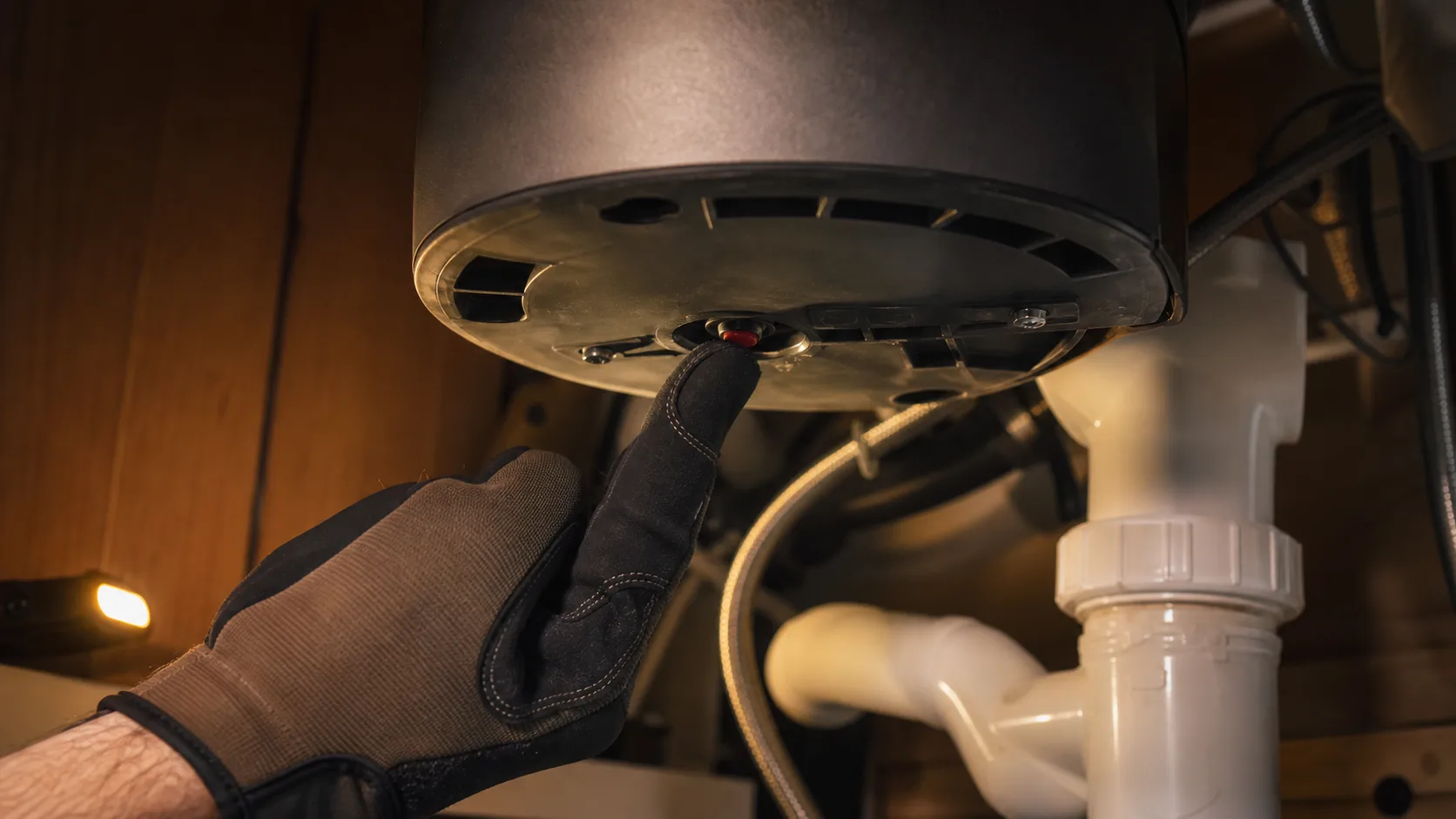
Look for a small red button on the underside of the unit, reachable from under the sink. It trips automatically when the motor overheats or overloads, working much like a circuit breaker built into the disposal itself, and pressing it back in is the single most common fix for a disposal that's gone silent or won't turn on. If it doesn't stay in, or pops right back out, that usually means the motor is still under load from a jam, so move on to step 2.
Clear a jam if the disposal hums but doesn't spin
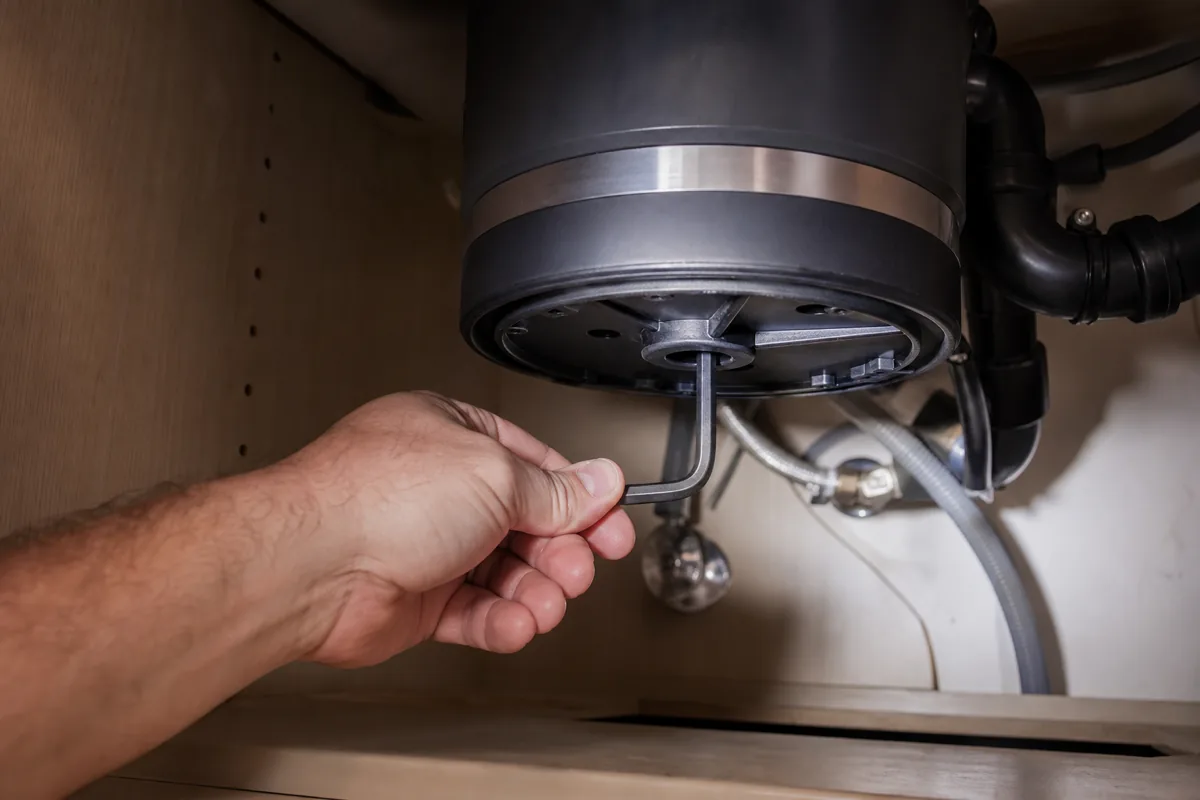
A hum without any spinning almost always means the flywheel inside is jammed, usually by a stuck utensil, a fruit pit, or a fibrous piece of food. With the power off at both the wall switch and the breaker, insert a hex key into the bottom port most residential models have specifically for this, or use a wooden spoon handle from the top to rock the flywheel free in both directions. Once it turns freely by hand, restore power and try the reset button again. If you're dealing with a jam specifically, rather than a dead unit, a fuller breakdown of what jams a disposal and how to clear it covers the noise-symptom differences and jam causes in more depth than the summary here.
Check for no power at all
If there's no sound, no light, and no hum whatsoever, and the disposal isn't turning on at all, confirm the wall switch is actually on, check that the unit is plugged in under the sink if it uses a cord, and check the breaker. Many homes wire the disposal to its own dedicated circuit, which can trip without affecting anything else in the kitchen, so a working overhead light doesn't rule this out.
Consider motor failure
If reset and jam-clearing don't resolve it and there's still no response at all, the motor itself has likely failed. On an older unit, this typically means replacement rather than repair, since motor rebuilds aren't common or cost-effective on residential disposals.
Before you call for service, a few things worth trying first
Run cold water while operating the disposal. It helps flush debris through and keeps the motor from overheating during longer grinding jobs. Avoid overloading it with fibrous scraps like celery, corn husks, or onion skins, some of the more common jam-causers, and run it in short bursts rather than trying to grind a full sink's worth of scraps in one go.