Work through it in order
Check the P-trap
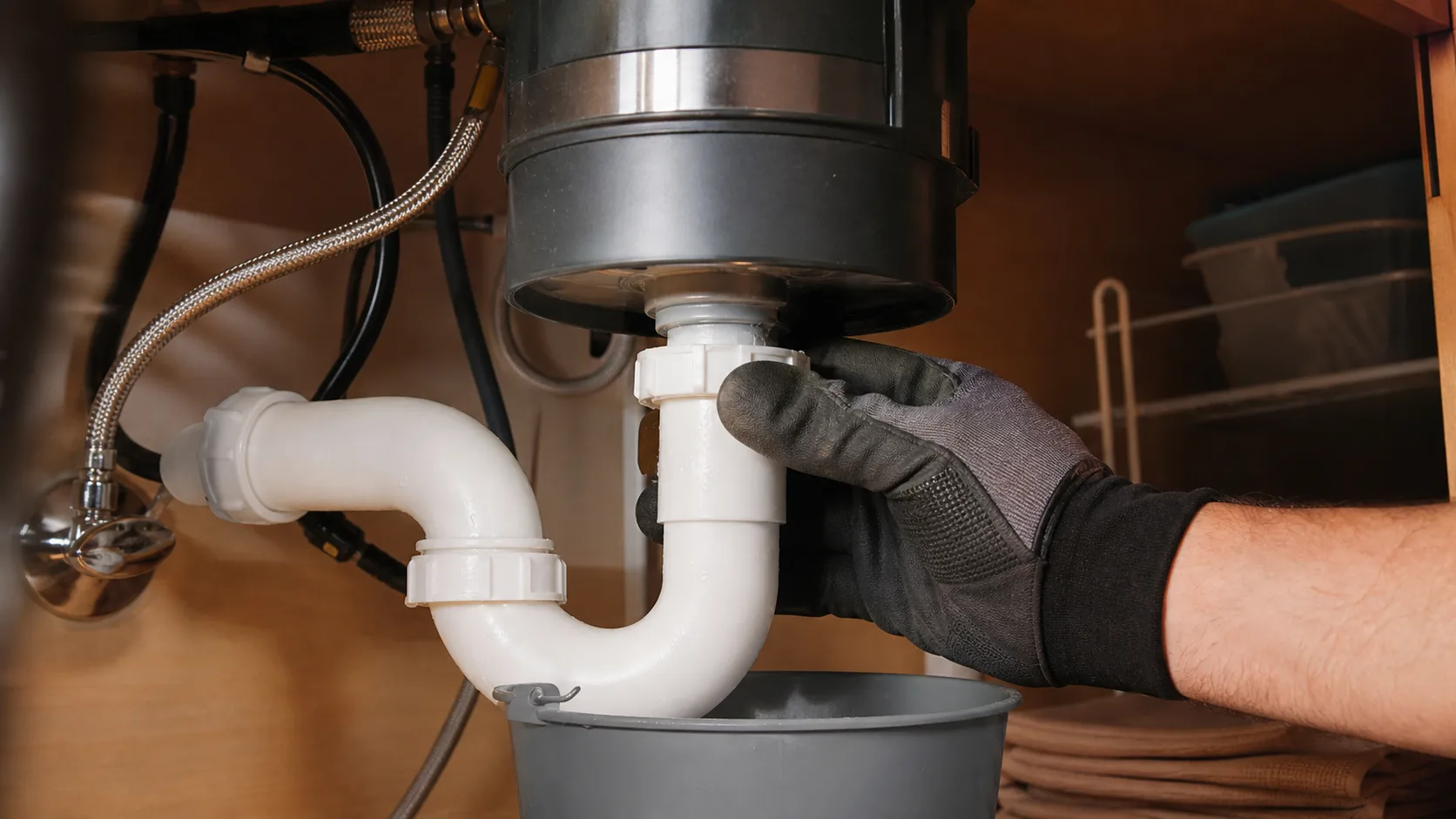
The P-trap directly beneath the disposal's discharge pipe is the most common clog point, catching grease and food particles that make it past the grinding chamber. Place a bucket underneath, loosen the trap's slip nuts by hand or with pliers, and clear out anything trapped inside before reassembling it.
Check the dishwasher connection
If a dishwasher drains through the disposal, confirm the dishwasher's knockout plug was actually removed at installation, a surprisingly common oversight after a new disposal install, and that the connecting hose isn't kinked. A forgotten plug blocks that pathway entirely even if everything else was installed correctly.
Check further down the drain line
If the P-trap is clear, a clog further along the branch line toward the wall produces the same backed-up symptom but needs a longer plumbing auger to reach, rather than something you can clear by hand at the trap.
Check for buildup inside the grinding chamber
If the disposal is running but grinding sounds seem off along with the drainage issue, excess food buildup inside the chamber itself can restrict flow even though the motor runs fine. With the power off, a thorough manual clean-out with a stiff brush can resolve this.
When it's not a clog at all
A disposal that runs but drains extremely slowly on every use, even after clearing the trap, may point to a venting issue elsewhere in the plumbing system rather than anything inside the disposal or its immediate pipes. That's a plumber's diagnostic, not a DIY step, since it usually means checking the vent stack rather than anything reachable from under the sink.