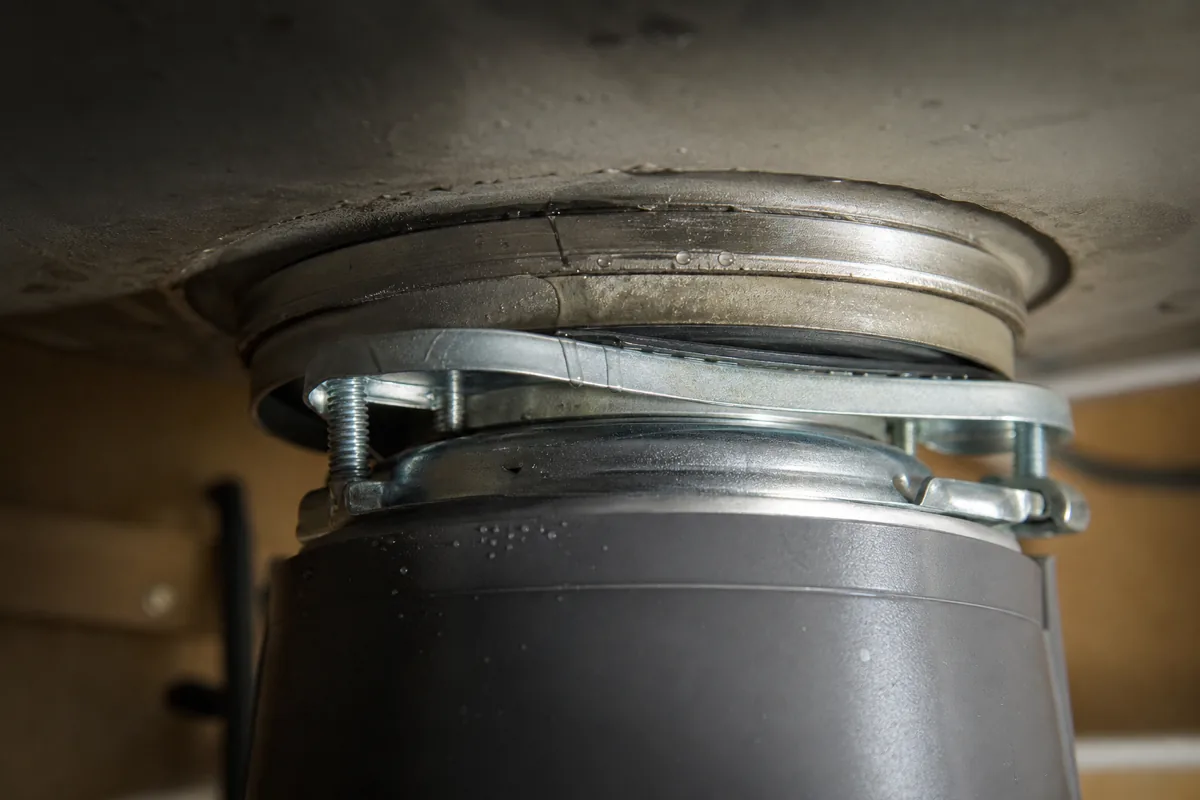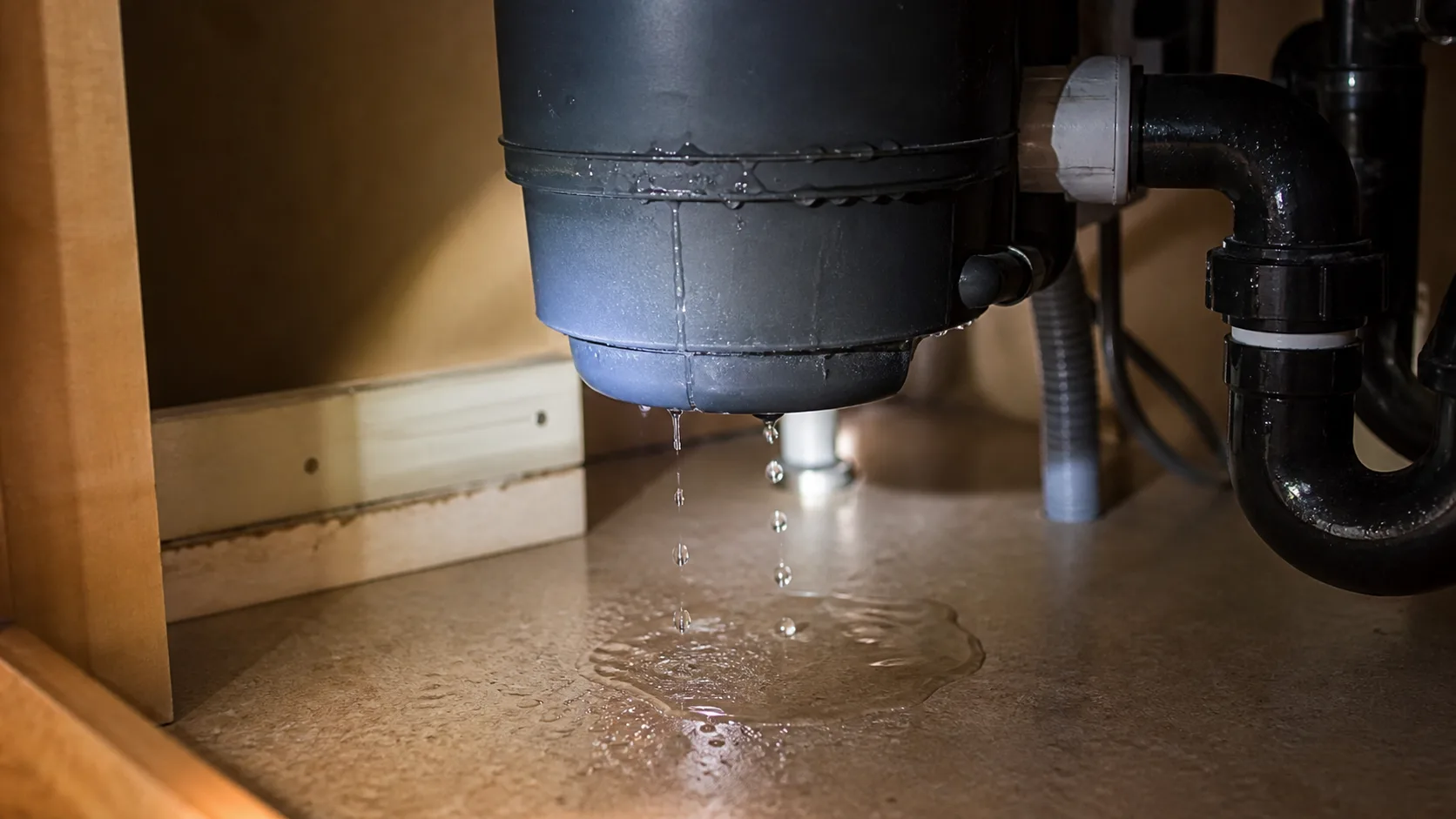
Find the leak point
Dry everything under the sink completely, run water and the disposal briefly, and check the top, sides, and bottom of the unit in that order to see where moisture reappears first. This one check tells you which branch below to follow, so it's worth doing properly rather than skipping ahead.
Work through it in order
Leaking from the top, near the sink
The sink flange gasket, which seals the disposal to the underside of the sink drain, has likely dried out or cracked over time. This typically requires removing the unit to reseat or replace the flange along with fresh plumber's putty, since the seal needs full contact around the drain opening to hold.
Leaking from the side
Check the connections at the dishwasher inlet, if a dishwasher drains through the disposal, and at the discharge pipe where it exits toward the drain trap. Both are held by clamps or bolts that can loosen gradually with vibration and use over time, and both are usually a straightforward tighten rather than a part replacement.
Leaking from the bottom
This points to a failed internal seal around the motor shaft, which isn't a user-serviceable part on most residential units. A bottom leak generally means replacement, not repair, since opening the housing to reach that seal isn't practical or cost-effective on a typical disposal.
When a leak means it's time to replace the unit, not repair it
- The leak is coming from the bottom, pointing to a failed motor-shaft seal.
- The disposal is already at or past its typical 8-to-15-year service life and is leaking.
- A top-seal repair leaks again shortly after reseating the flange.