Types of shingle damage and what they mean
Not all shingle damage means the same thing or needs the same response.
- Cracked shingles. Usually age or weathering. Often repairable on its own without touching neighboring shingles.
- Curling shingles. Also age or heat related, but curling frequently signals that nearby shingles are approaching the same point, even if they still look intact today.
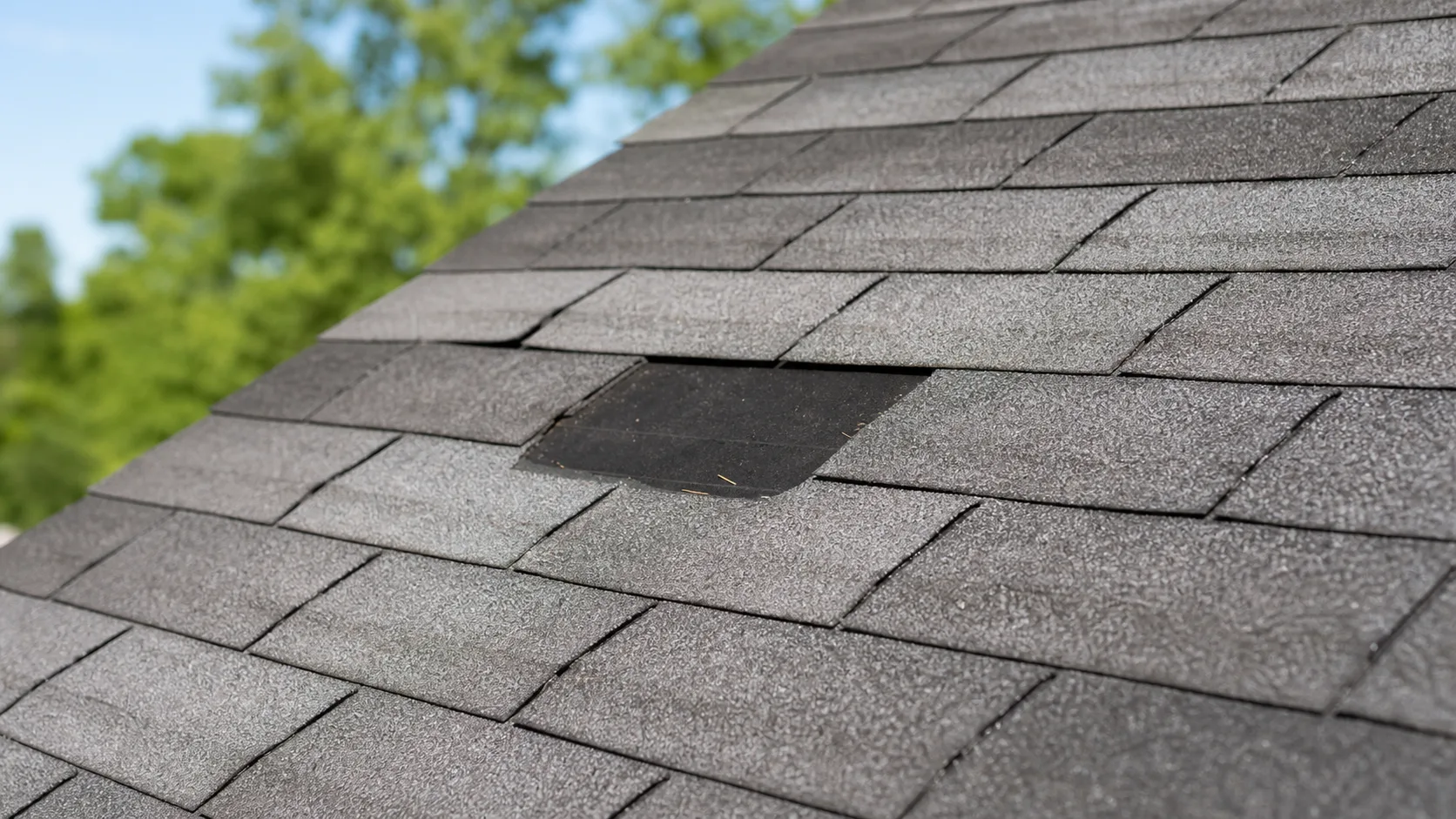
- Missing shingles entirely. Almost always wind damage, and the most urgent to fix since the underlayment underneath is directly exposed to weather.
What you'll need
- Replacement shingles matched to your existing roof as closely as possible
- Roofing nails
- A flat pry bar
- Roofing cement
- A utility knife
One honest note: an exact color match isn't always possible on a roof more than a few years old, since shingles fade unevenly with sun exposure. A close match from the same manufacturer's current line is usually the best you'll get.
Step-by-step shingle replacement
A couple of terms come up in the steps below. A shingle's tab is the exposed lower section you can see on the roof, the part that takes the weather. A course is one horizontal row of shingles running the length of the roof, with each row overlapping the one below it. The steps themselves differ depending on the type of damage, so work from the section that matches what you're dealing with.
Replacing a missing shingle
- Slide the replacement shingle into position under the course above it.
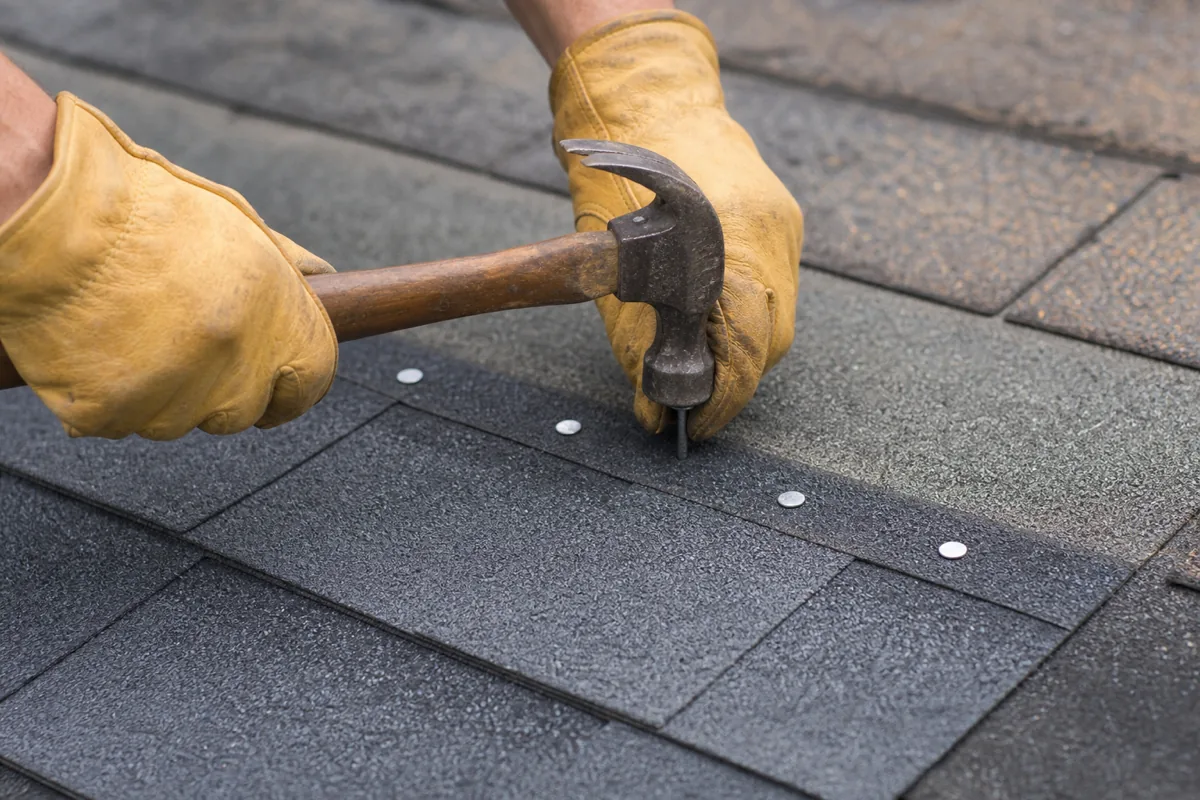
- Nail it in using the standard four-nail pattern.
- Seal the tab with a small amount of roofing cement to hold it flat.
Replacing a cracked shingle that's still nailed down
- Lift the tab of the shingle course above to expose the nails underneath.
- Remove the old nails with a flat pry bar.
- Slide out the damaged shingle.
- Slide the new shingle into the same position and renail it in the standard four-nail pattern.
- Seal the tab with roofing cement.
Resealing curling shingles as a stopgap
If a shingle is curling but not yet cracked or missing, lift the edge slightly and apply roofing cement underneath to hold it flat against the roof. This buys time but doesn't fix the underlying aging that caused the curl in the first place, and it's worth watching that shingle over the next season or two.
When shingle damage means more than a single-shingle repair
A few signs point to something bigger than what this page covers:
- Damage spread across a wide area rather than a small, isolated spot
- Granule loss (the small mineral granules on a shingle's surface washing off and collecting in the gutters), which signals broader roof age rather than just this one spot
- Damage that keeps recurring in the same area even after a repair, which often points to a flashing or ventilation problem underneath rather than the shingles themselves. If that sounds like your situation, roof flashing repair covers that specific cause.