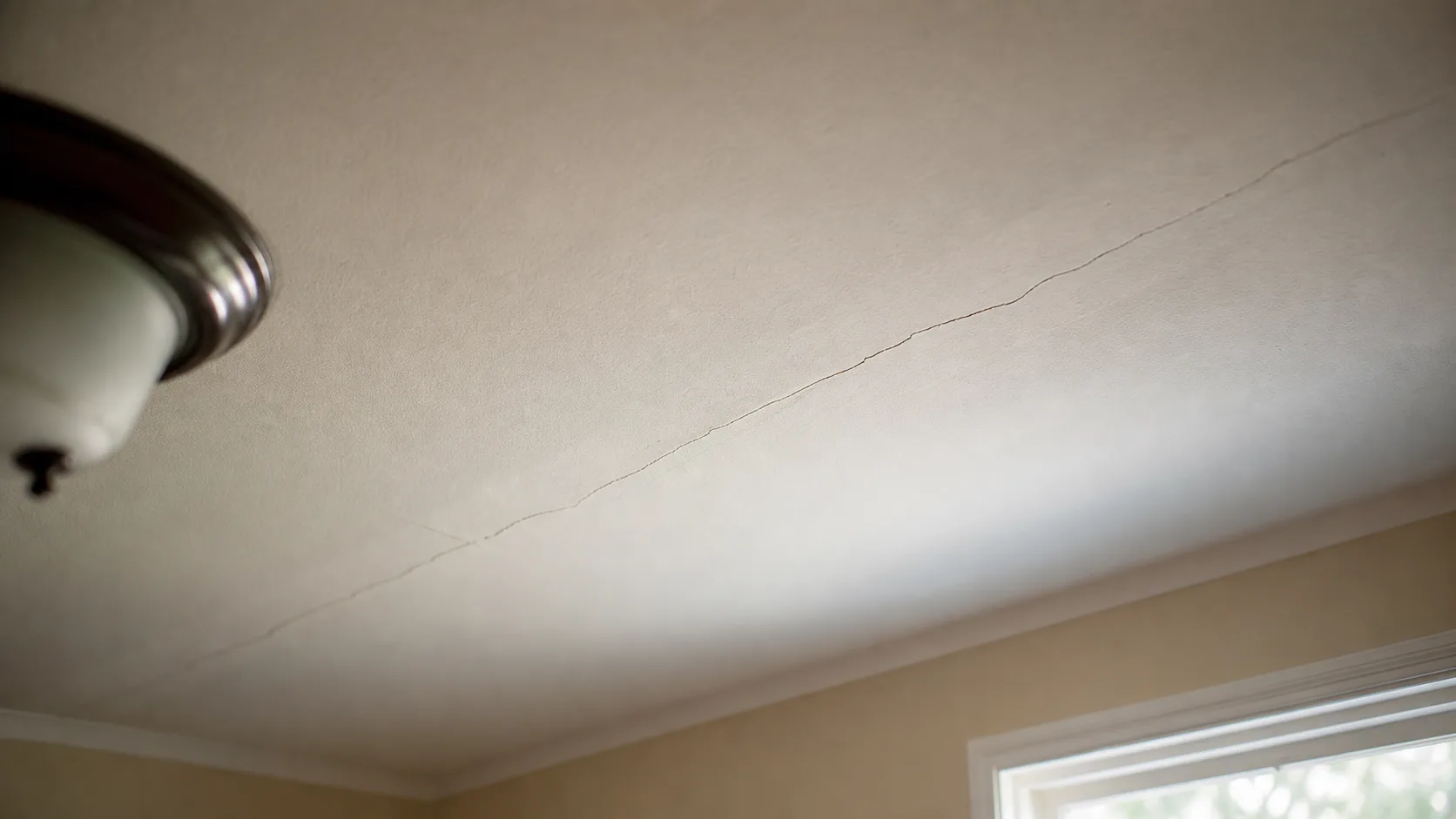
Is this crack cosmetic, or a sign of something bigger?
This is the question that decides everything else about how you approach the repair, and it's worth answering honestly rather than either panicking or waving it off. A hairline crack under about 1/8 inch that isn't visibly growing, isn't paired with any other symptom in the room, and doesn't reappear quickly after a prior patch is typically cosmetic. Common causes include the house settling slightly with the seasons, humidity swings expanding and contracting the framing, or a single drywall screw or nail popping loose.
A crack is worth a professional structural look, a foundation contractor or structural engineer, not a drywall repair, before you resurface over it, if it's widening over time, runs diagonally from a corner, shows up alongside a door or window that's started sticking, or reappears within weeks of a previous repair. None of these signs on their own is necessarily an emergency, but together or repeated, they point to ongoing movement that a cosmetic patch won't address.
Tools and materials
- Self-adhesive fiberglass mesh tape
- Joint compound
- A 6-inch and a 10-inch taping knife
- Sandpaper, 120 to 150 grit
- A stable ladder or scaffold
- Primer and matching ceiling paint
Repairing a cosmetic hairline crack
Use this method once you've confirmed the crack doesn't show any of the warning signs above. The full guide to patching a standard drywall hole covers the same backing and feathering techniques in more depth, if you're new to working with joint compound.
- Lightly widen the crack with a utility knife or a crack-repair tool so the compound has something to key into, rather than just bridging the surface.
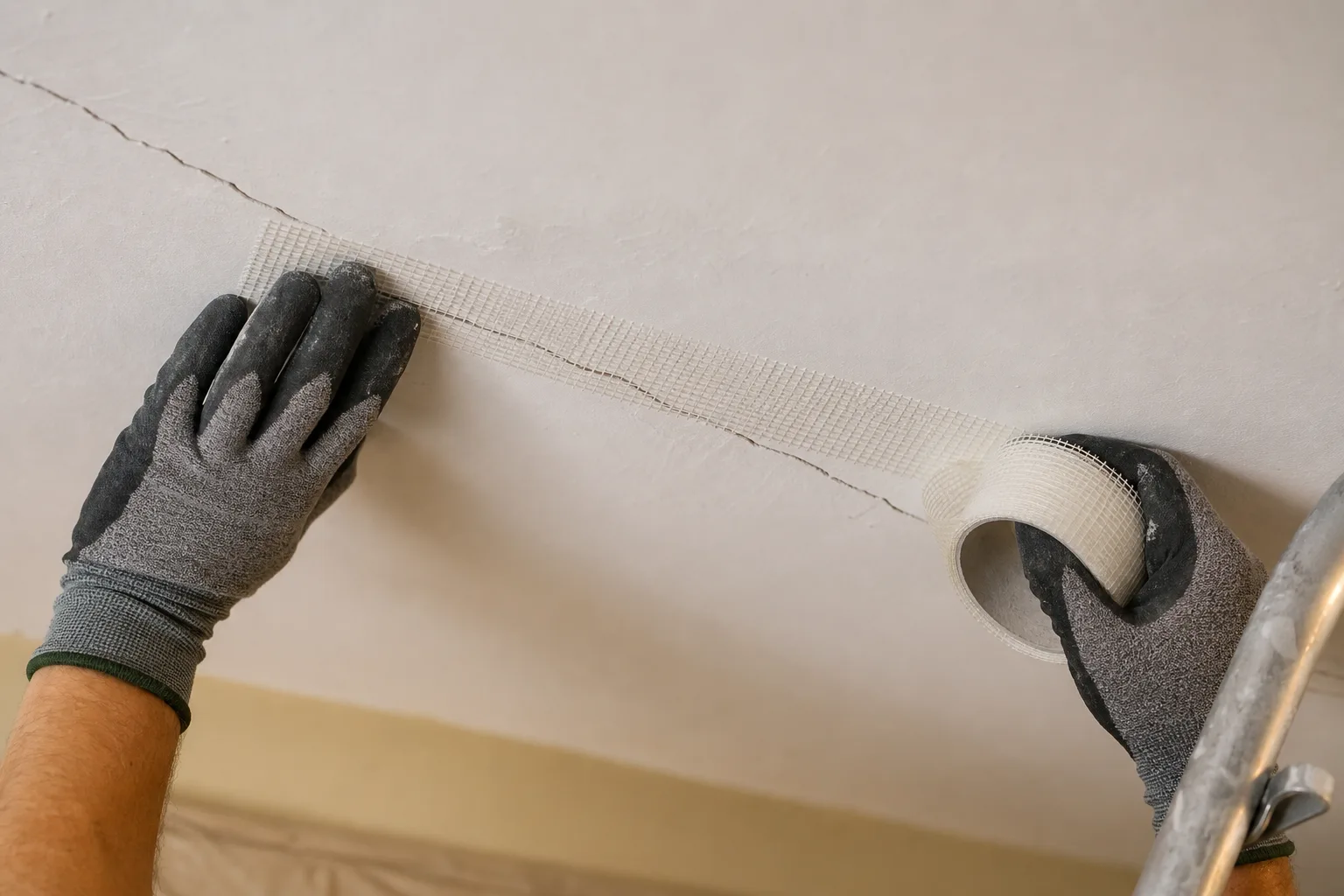
- Apply self-adhesive mesh tape directly over the crack.
- Apply a thin first coat of joint compound over the tape, feathering the edges so it blends into the surrounding ceiling.
- Let it dry fully, then apply a second, wider feathered coat.
- Sand smooth once dry, prime, and paint to match.
Why cracks come back in the same spot
Two habits explain most repeat cracks. Taping directly over a crack without widening it first leaves the compound bridging a surface that's still moving underneath, rather than actually keying into it. Using compound alone, without mesh tape underneath, is the other common shortcut, and it fails for the same reason: nothing in the repair is actually spanning the joint's own movement, just sitting on top of it. A repair done either way can look fine for a season and then reopen right along the original line.