Work through it in order
Start with the simplest, most common cause and only move on if it checks out clean.
Check the drain valve
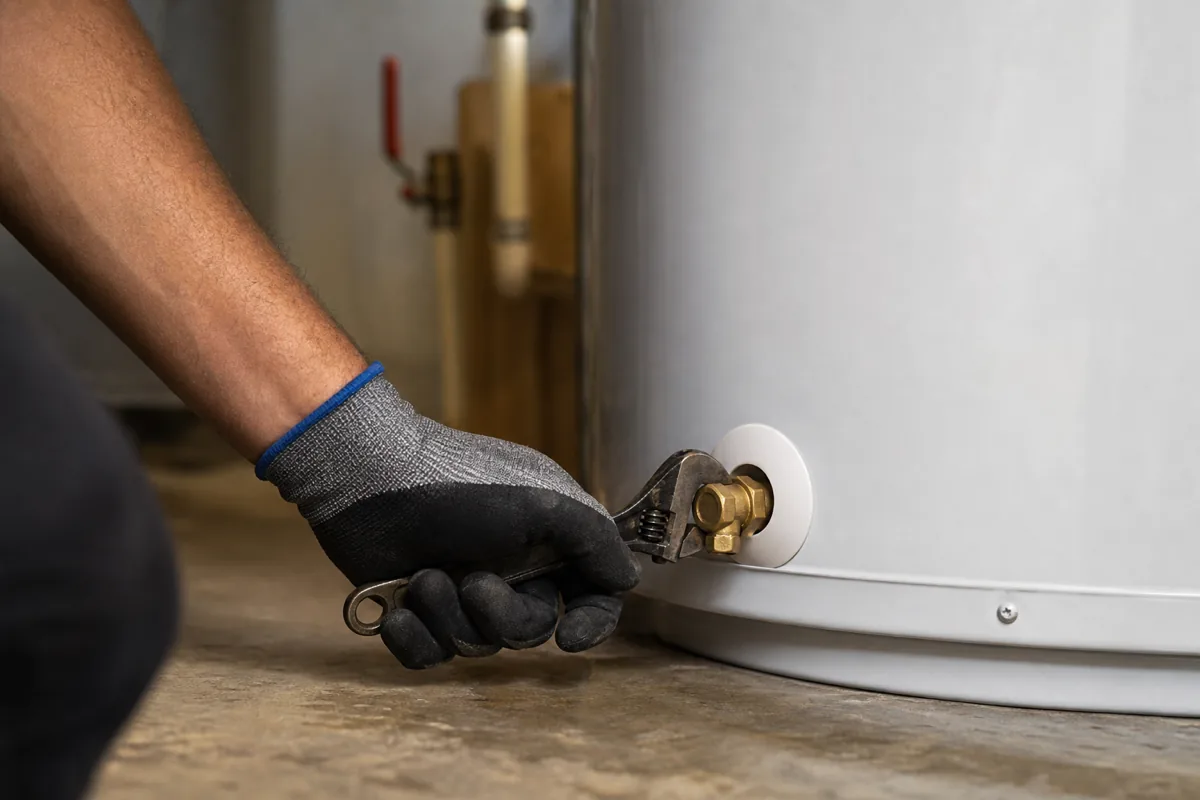
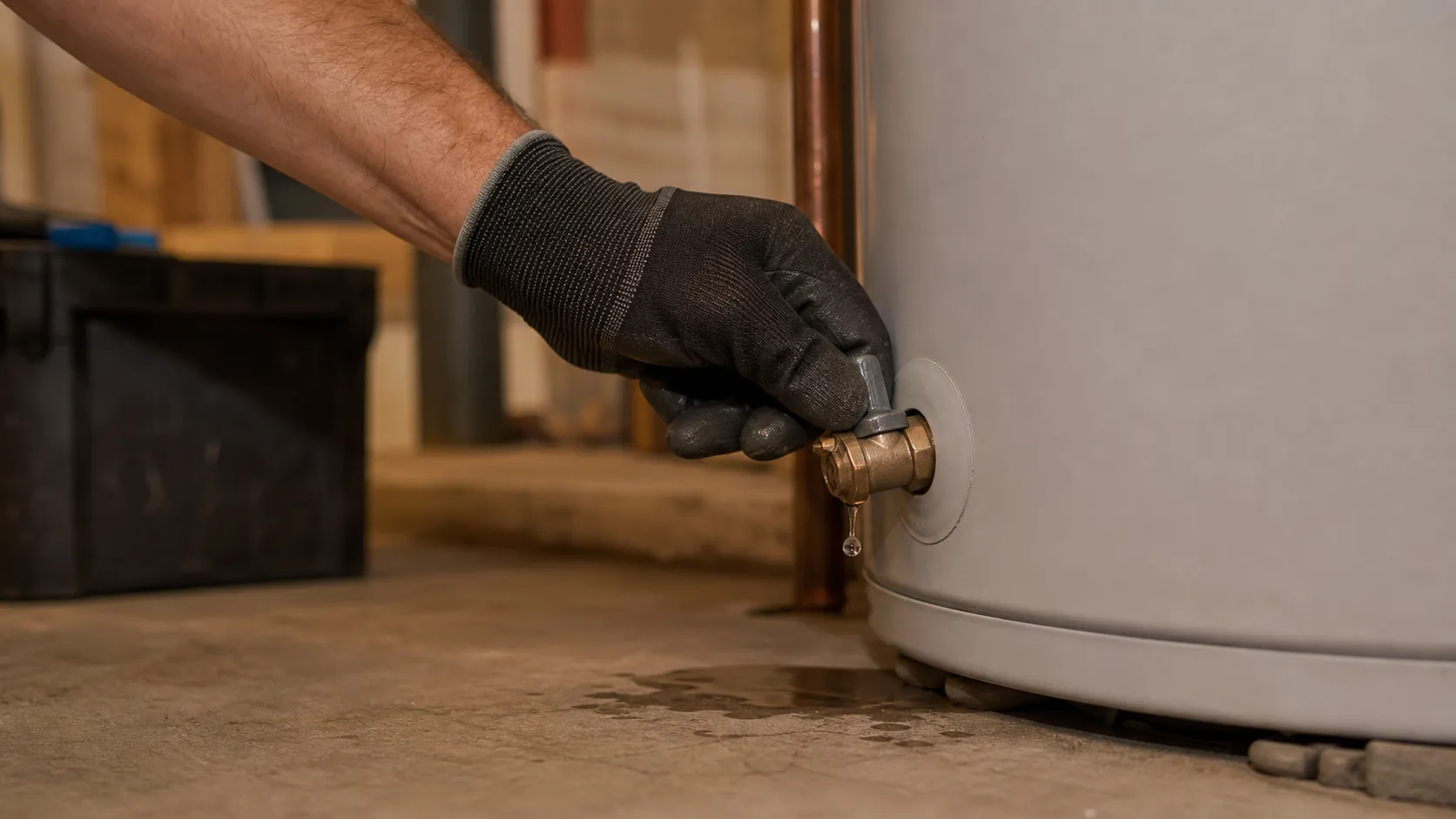
The drain valve sits at the base of the tank and is the single most common source of a bottom leak. If your unit has a plastic valve, try hand-tightening it first, plastic valves loosen with age and vibration and often just need a quarter-turn. If it's a brass valve, look for a worn washer or a cracked valve body instead, since brass valves rarely just come loose.
What to check:
- Is water actively dripping from the valve handle or spout, or just damp around it?
- Does gently hand-tightening (don't force it) stop new dripping within a few minutes?
- Is the valve itself cracked, corroded, or missing its cap?
Rule out condensation
Condensation is easy to mistake for a leak, especially right after the tank refills with cold water. Dry the entire area around the base completely with a towel, then wait 20 to 30 minutes without running any hot water. Condensation typically won't reappear, or it'll show up as a thin film rather than new pooling. An actual leak produces fresh water in the same spot.
Check the T&P valve discharge pipe
The temperature and pressure relief valve sits near the top of the tank, but its discharge pipe usually runs straight down the side and can drip near the floor. This can look exactly like a bottom leak even though the actual problem is at the top. Trace the pipe with your eyes, or a flashlight, from the valve down to where the water is appearing. If the pipe itself is wet along its length, or the drip starts higher up and runs down, the T&P valve is the real source, not the base of the tank.
Inspect for tank corrosion
This is the check you don't want a positive result on. Look closely at the seam where the tank body meets its base, and at the metal shell itself, for rust-colored streaks or active seepage that isn't coming from a fitting or valve. Corrosion leaks tend to look like they're weeping directly out of the steel rather than dripping from a single point.
Is it the drain valve or the tank itself?
This is the highest-value decision on this page. A drain valve is a cheap, fast fix. A corroded tank means the unit is done.
| Sign | Drain valve | Tank corrosion |
|---|---|---|
| Leak location | Comes from the valve handle or spout specifically | Comes from the tank body or seam, not a fitting |
| Water appearance | Clear drip or steady stream | Often rust-tinted, may leave orange or brown streaks |
| Response to tightening | Often stops or slows | No change |
| Age of unit | Can happen at any age | Far more common past 8 to 12 years |
| Fix | Tighten or replace the valve | Replace the water heater |
What to do if it's the tank
If the leak is coming from the tank body itself, don't try to patch it. A water heater tank is a pressurized vessel, and sealing over active corrosion won't hold and isn't safe to attempt. Shut off the cold water supply valve, turn off the gas control or the breaker for the unit, and place towels or a shallow container underneath to limit water damage while you arrange a replacement. Corroded tanks tend to get worse quickly once the leak starts, so this isn't something to leave for a few weeks.